Showing posts sorted by date for query apple. Sort by relevance Show all posts

Wednesday, June 25, 2025

The Next Web Begins with Robots and Drones

 If you're old enough to remember the Internet boom, you know that it was the launch of Windows 95 that really triggered it.

Remember the lines of people waiting to get their copy of this new operating system that make personal computing so much easier?

windows 95 launch


What Windows 95 did was put a PC in millions of homes...and you know what came next.

The SAME THING is happening now, but instead of homes getting new computers, the physical world is.

Drones and robots are the new "PCs", and Google's new robotics AI is helping to start The Next Web..Apple calls it the Spatial Web.

What happens next? 

All of those drones will be connected to the Internet, and soon to each other.


Thursday, May 05, 2022

Facebook Meta Hiring Slowdown Is A Warning To Email Marketing


 Facebook plans to reduce hiring.

From CNBC.com

"Wehner reiterated to investors that privacy changes Apple instituted on its iOS devices last year will hurt growth, after the company had already predicted the move would reduce revenue this year by $10 billion."

Those "privacy changes" are impacting more companies and industries than just Facebook.

Not only do they prevent Facebook from tracking users across their apps on the iPhone, but the new privacy features will have enormous ramifications for email marketing companies.

“Mail Privacy Protection hides your IP address, so senders can’t link it to your other online activity or determine your location. 

And it prevents senders from seeing if and when you’ve opened their email.” Apple

It basically sends an email into a "holding tank" so it appears that EVERY email has been opened.

Read more about Apple's email privacy solution. 


Thursday, July 30, 2020

Does Congress Really Think They Can Stop Big Tech?

Source NY Times https://www.nytimes.com/2020/07/29/technology/big-tech-hearing-apple-amazon-facebook-google.html


It was simply embarrassing to watch.

Politicians (um lawyers) tried to grill the heads of Big Tech, and all they did was prove how clueless they are when it comes to how Big Tech works, and how they make their money. (but they don't mind taking donations from them).

This isn't Big Tobacco or a physical product, it is data creation and monetization that they control. You can't touch it or just change the packaging.

What these ignorant politicians don't realize is that Big Tech has ALREADY identified every computing device that has connected to the Internet.

Silicon Valley is 3 years ahead of the curve when it comes to technology, and the government is 3 years behind.

If the government is really serious about breaking up Big Tech, before they start regulating ads, search or content, they need to start with HOW Big Tech is able to collect data from EVERY device that is connected to the Net.

Take away the thing that gives them their monopoly..device identification.

Remote browsing is a great start to level the playing field against Big Tech.

Sure Big Tech will still be able to collect data from the computer doing the browsing, but they won't be able to correctly match the data with the actual person that is doing the browsing.


Friday, February 03, 2017

What Does This Do To The App Store Space?


Comes under the category of "Why didn't I think of that?".

Doesn't it seem antiquated that we need to go to a separate site to use an app?

What happens to the control that the iTunes and Google Play have?

1App allows apps to bypass the app store to get users to download. They cut out the middleman (app store).


The Menlo Park, California-based startup has taken the disruptive cloud-streaming technology and applied it to the problem of app discovery. Now you can use 1App’s OneOS to instantly deliver a mobile app to someone who wants to try it out.

Raheel Hasan, CEO of 1App, said in an interview with VentureBeat that 1App can stream a full app experience to any device in any mobile environment. You could play an Android game on an iPhone if you wanted to, with no waiting and now no need to bother with stores or downloads.

The question is...who gets the data now?   

Will apps need to place their app in the app stores?
Can this be the new way to get an app on a device?
What percentage of the revenue will 1App get versus who places the app ad?
What will this do to Apple's 30% cut on app subscriptions? 
Has 1App found a way over Apple's walled garden? 

Wednesday, February 01, 2017

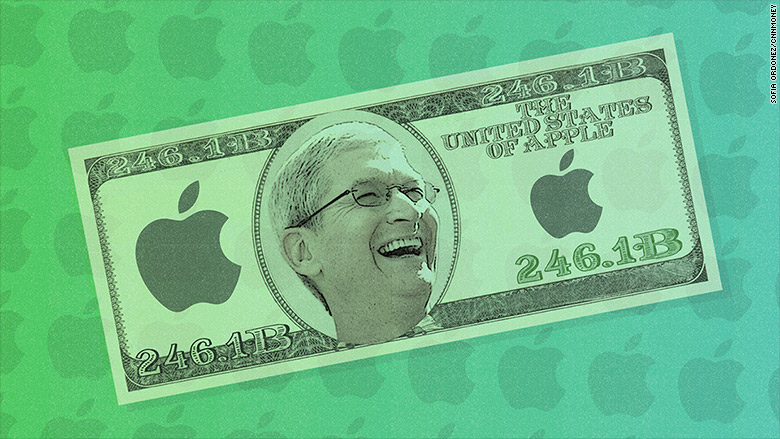
What Apple Should Spend Some Of That $246B On


Google's motto is "Don't Be Evil".

Apple likes to "Think Different".

Apple's new slogan should be, "Making the next generation even better"..here's how you do it.

Apple, every kid in this world has bought SEVERAL products of yours, I think it's time to give some of that profit back, in a very productive way.

Apple has $246B in cash sitting offshore. President Trump wants it back on this side of "the wall".

Silicon Valley is all up in arms about the immigration issue. They all fear they might lose some talent or be prohibited from poaching from other countries. We have the brightest minds in the world but they are being taught the skills to survive in an analog world.

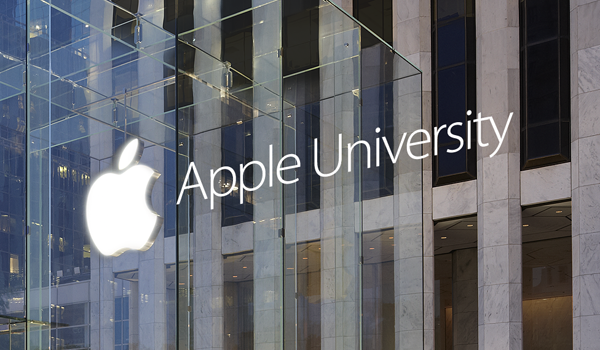
Take $10B and start the Apple University.


 M.I.T, Harvard, Stanford.....and now Apple.

Teach the next generation the necessary skills (computer, math, physics etc) needed to survive in the new digital job marketplace.

What kid wouldn't want to go to THAT school?

The winners in the next generation will be kids that create, not regurgitate facts (that's why we have Google). Computers and software are great at processing but they lack the ability to create. THAT is the skill our kids should be learning.

Apple could even abolish the current testing standards and create new ones.

Think of the possibilities.


Saturday, December 31, 2016

Why Apple Is Overvalued And Destined For Hard Times


Yes, we love Apple and their products...but they are still thinking "local" and it is going to cost them dearly.

From the ability to carry around all of our music IN the iPod to the neat way of running applications ON our phone, Apple has clearly nailed this strategy...

However, this is their downfall.

Content and computing are shifting from being ON the device to IN the cloud and when your business depends on selling high end consumer devices, that is going to be a very big problem going forward.

Adding a camera was a pretty big step for the mobile phone. Then the creation of the app store and all of the wonderful things you could now do with a phone, was a boom for many people/industries.

Where are we going?

It is called cloud computing because the computing is done on the cloud, not the device. The applications and content will be accessed and run in the cloud and not on the device.

So when you're selling a phone for $800, when YOUR COST is $200, but the true cost of just the hardware is $25, that's a very problem for your business.

Apple, and others, should look very closely at Google and their Chromebook to see where the future is headed. The number one selling laptop isn't a laptop at all, it's simply a connection to the cloud.

Indeed Microsoft sees the future and thinks it can give the Chromebook a run for its money with the recently announced partnership with Qualcomm

The next "must have" mobile phone will be a "cloud phone", or something very similar to Chromebook capability in a mobile phone size. A simple device, costing under $100 that just accesses the cloud for your content and applications. You drop it or it gets stolen, no big deal. The battery life will be days now that unnecessary applications dont need to be running constantly. The bandwidth used will shrink (telecoms will love).

I can have access to IBM's Watson and high powered graphics, there is NO point in keeping the computing on the device any more.

The days of different app stores will be a thing of the past and Apple's iTunes gold mine will end fast. Why do I need to download the Facebook app from several stores for different devices? App stores are just glorified browsers and who pays for those?

In 2007 I discussed how Apple could introduce an iTunes browser and become an ecommerce powerhouse, Amazon beat them to it.

In 2010, I stated how Apple could turn their iTunes into the "killer platform" and be a cloud pioneer, but they sacrificed future for device revenue.

The shift from websites to apps that run websites fragmented many industries..that all changes. One app that runs on all devices. Period.

Kodak didn't see the shift from analog to digital. Apple isn't seeing the shift from local to the cloud.


Thursday, September 08, 2016

Apple Kills Headphone Jack But Fails To See Real Trend


Hey Apple,

The future of audio may be wireless, but the future of computing is on the cloud, not the device.

Apple's decision to remove the headphone jack, "diminutive legacy port", in new iPhone is definitely a  step ahead of the crowd and will force even more sales to another new consumer Apple product (Lightning Ear Pods and adapter).


Apple is arguing that the future of audio is wireless, that the world’s current assumptions about mobile audio are not only antiquated, but worthy of immediate abandonment.

 
But right now that future comes with a price: You’ve got to leave behind the perfectly good headphones you own and you’ve got to purchase the new wireless ones as an iPhone accessory.

Don't get me wrong, Apple makes great products but they are behind the curve when it comes to the future of computing. The rapid sales growth of the Chromebook is showing us, the cloud computing shift is already taking place.
 
When the functions on the device (Siri, pinch zoom, camera etc) can be used with the computing power (and content) from the cloud, your disruption takes place. The operating system will be the cloud, not on the device..so what will the new iPhone or Samsung Note really be?..just some metal and glass. I dont think you will see many consumers paying $700 for some metal and plastic.

I dont see consumers paying $700 for that.

Wednesday, May 13, 2015

Microsoft's Continuum...Very Disruptive


 Simply put..Microsoft's Continuum turns Windows 10 phones into desktops.

Could a Windows 10 phone be the "mobile Chromebook"? One device that connects to the Cloud and delivers content to any display. Could those Chromebooks and other "dumb clients' get even dumber?

Using a Win 10 phone your iPad, laptop, PC, TV becomes just a display.


In contrast to Apple’s “Continuity,” which aims to make moving between phone, tablet and desktop seamless, Microsoft’s Continuum instead has the phone you’re using adapt its interface depending on the context you’re using it.


Dubbed Continuum for Phones, it’s designed to take advantage of new universal apps that run across Windows 10 on phones, PCs, tablets, and the Xbox One. If you’re running a mobile version of Excel on your phone it will magically resize and transform into a keyboard- and mouse-friendly version for use on a bigger screen. It feels like the future.

In an on-stage demo, Microsoft’s Joe Belfiore connected a phone to a monitor, keyboard and mouse, and instantly the UI he was using adapted to the new inputs and outputs. While the operating system interface we saw on screen didn’t look exactly like Windows 10 on a laptop or desktop computer, the applications shown (especially PowerPoint) did. Instead of making minor adjustments to a presentation using a 5-inch screen, you can simply connect to an HDMI-compatible monitor and have all the space and tools you would on a full PC.
 
 the feature really shines when apps have been built to scale across form factors,(source)

lets Windows 10 devices use a single device for mobile, tablet, and desktop interfaces. For example, a Windows 10 Phone can be converted into a full-sized desktop after being plugged into a larger screen. In the near future, consumers might only need a single all-in-one mobile device instead of a phone, tablet, notebook, and desktop. 

Ideally, all those users would be tethered to Microsoft's cloud-based productivity apps like Office 365 and OneDrive, while user data would be synced to Azure, its growing cloud computing platform. (source)

Saturday, February 22, 2014

Stories I Found Of Interest (weekly)

    • It is a fool's errand to try to raise the living standards of the bottom 60% through higher income taxes on the top 1% or 0.1%.
    • The shift in incomes in favor of the wealthy has been due to several large forces, including a world-wide boom in asset prices, the rise of global markets, and technological innovation that has increased the earning power of the well educated.
    • At a time of slow economic growth, mounting government debt, a stalemated politics and the impending retirement of the "baby boomers," the attacks on the "one percent" look more and more like a diversion from the nation's real problems.
    • Using an array of sensors and eight video cameras around the terminal, the light fixtures are part of a new wireless network that collects and feeds data into software that can spot long lines, recognize license plates and even identify suspicious activity, sending alerts to the appropriate staff.
    • The light fixtures are outfitted with special chips and connect to sensors, cameras and one another over a wireless network. Data that is collected — say, a particular car pulling up to the terminal — can then be mined and analyzed for a broad range of applications
    • The newspaper has also learned that Apple is heavily exploring medical devices, specifically sensor technology that can help predict heart attacks. Led by Tomlinson Holman, a renowned audio engineer who invented THX and 10.2 surround sound, Apple is exploring ways to predict heart attacks by studying the sound blood makes at it flows through arteries.

Posted from Diigo. The rest of my favorite links are here.

Saturday, January 18, 2014

Stories I Found Of Interest (weekly)

    • NeulNET is based on the new Weightless standard, which takes unused fragments of radio spectrum and harnesses them to connect smart meters, structural-integrity sensors and other devices without needing dedicated spectrum. Low power is the name of the game – this is all about devices that can run for many years without needing new batteries or other maintenance. Think of this technology as the machine-to-machine connectivity glue for the “smart cities” concept
    • The new system is supposed to give operators everything they need to dive into this new world of connected lampposts and bridges. At the heart of it is the NeulNET Connected Device Platform (CDP), a cloud-based platform for device and service-level management, authentication and billing, for which operators will pay on a “per device, per month” basis.
    • Wi-Fi calling is a significant feature because it allows you to place and receive calls and text messages over Wi-Fi instead of your cellular network.
    • According to MoneyTree’s annual report, the software sector captured 37% of total venture capital for the year, which is the highest percentage recorded since MoneyTree’s inception in 1995.
    • America’s safety net can sometimes entangle people in a soul-crushing dependency.
    • There is no cure for poverty, because there is no cause of poverty — poverty is the natural condition of the human animal.
    • The government gives people checks, but nobody teaches them how to live
    • Our vision is that the storage market is facing a transition from hardware-based primary storage coming from the big guys like NetApp, EMC and Dell to a much more flexible, elastic software-based primary storage,”
    • France’s Bouygues Telecom has effectively abandoned its program for using mobile phones as contactless payment devices
    • NFC is still not a sure thing when it comes to handsets – indeed, outside of a couple of countries it’s barely taken off for users of contactless payment cards. Part of this is down to manufacturer enthusiasm; Apple, for example, still doesn’t build NFC into its iOS device
    • We may be entering the era of sponsored data — the era of an internet that we don’t directly pay for, but that we also don’t control. It’s the old net neutrality nightmare, in other words, disguised as a gift.
    • an assurance that internet providers can’t favor one kind of traffic over another, or charge for access to certain parts of the internet. All traffic, according to the rules, was to be treated equally
    • This ruling means there is no one who can protect us from ISPs that block or discriminate against websites, applications or services,” says a statement from the organization. Tell the FCC to start treating broadband like a communications service, and to restore its Net Neutrality rules.”
    • n plain English, this means that they have had to behave in a similar way to phone companies and not give special preference to one type of call (or traffic) over another.
    • The upshot of Tuesday’s ruling is that it could open the door for internet giants like Verizon and Time Warner to cut deals with large content providers — say Disney or Netflix — to ensure that their web content was delivered faster and more reliably than other sites.
    • If the decision stands, it could mean that Internet providers could soon start charging websites like Google, Facebook and Netflix to reach users.
    • when a company like Google — which has had numerous run-ins over privacy in the U.S. and abroad — plans to buy a company that makes products equipped with motion detectors that track what’s happening inside the home, it’s time that conversation about privacy and the internet of things takes a step forward
    • The continued growth of the mobile ecosystem depends on unimpeded access to data. New radio technologies that enable spectrum sharing and better public policies will ensure that wireless innovation continues without disruption.
    • As growing numbers of devices consume more capacity, carriers are being compelled to make billions of dollars in capital investments for additional spectrum resources
    • Why is this spending spree even necessary? In large part, it is the result of ill-conceived government policies, such as auctions, that have created artificial spectrum scarcity. Much spectrum sits idle at any given time due to spectrum auctions, which give service providers control over large swaths of our wireless infrastructure. That encourages inefficiency and underuse of spectrum. It also costs carriers billions and keeps new competitors and technologies out of the market.
    • Vint Cerf, one of the creators of the Internet, recently said that radio spectrum isn’t being used effectively due to regulatory constraints that make sharing spectrum more difficult. Continuing the practice of doling out precious spectrum resources through auctions won’t help carriers to adequately meet consumer demand, but the government is still allocating significant spectrum resources to individual carriers.


      Think of it this way: The government is allowing private companies to build highways that only green cars can drive on — even when adjacent roads are backed up for miles with traffic jams. Apple or Google could provide additional capacity for their services if more spectrum was available for shared use. Even carriers could expand their device and service offerings. Instead, service providers need to recover their auction investments from the customer.

    • There is now a consensus among regulators that neither the spectrum availability nor inefficiency problems have been solvable with existing technical and regulatory approaches. FCC Commissioner Mignon Clyburn has responded by c
    • VMware leads the world in server virtualization but has struggled in its desktop virtualization efforts where it lags Citrix’ XenDesktop.
    • The year of desktop virtualization:

Posted from Diigo. The rest of my favorite links are here.

Saturday, January 04, 2014

Stories I Found Of Interest (weekly)

Posted from Diigo. The rest of my favorite links are here.

Saturday, September 21, 2013

Stories I Found Of Interest (weekly)

    • Dish Network Service, the satellite TV company, provides a typical example of the tablet and smartphone innovation we saw this year. Dish gave 15,000 field technicians Samsung Galaxy Note "phablets" on which they do all their work. Each device replaces three: a tablet PC, push-to-talk phone and in-vehicle GPS. The consumerization payoff comes from having a dramatically cheaper tech platform (several million dollars in savings the past year, the company says) and doing less training because the interface is familiar and easy to use.
    • All proper human interactions are win-win; that’s why the parties decide to engage in them. It’s not the Henry Fords and Steve Jobs who exploit people. It’s the Al Capones and Bernie Madoffs. Voluntary trade, without force or fraud, is the exchange of value for value, to mutual benefit. In trade, both parties gain.
    • It turns out that the 99% get far more benefit from the 1% than vice-versa
    • For a couple of reasons: it opens a door to new set of applications such as indoor maps and in-store marketing, it makes the internet of things a realty and it might kill NFC (near-field communications), the wireless technology most linked with mobile payments
    • Using Bluetooth Low Energy(BLE), iBeacon opens up a new whole dimension by creating a beacon around regions so your app can be alerted when users enter them. Beacons are a small wireless sensors placed inside any physical space that transmit data to your iPhone using Bluetooth Low Energy (also known as Bluetooth 4.0 and Bluetooth Smart)
    • Just like NFC, iBeacons even allow you to pay the bill using your smart phone. The best part? iBeacon can run for up to two years on a single coin battery and it comes with accelerometer, flash memory, a powerful ARM processor and Bluetooth connectivity
    • On the other hand, iBeacons are a little expensive compared to NFC chips, but iBeacons range is up to 50 meters. Not all phones have NFC chips, but almost all have Bluetooth capability.
    • Several months after calling for legislation to unlock cellphones, the White House filed a petition with the Federal Communications Commission on Tuesday asking that all wireless carriers be required to unlock all mobile devices so that users can easily switch between carriers.
    • With so many competitors in such a relatively small but rapidly growing market, it is highly likely that price wars will soon start to ripple across the market. Rising competition means smaller margins, which will inevitably push some smaller competitors out of the market.
    • All of these factors point to one conclusion: Big tobacco has the ability to lock out smaller competitors.
    • All in all, e-cigs may be one of the fastest-growing and most disruptive technologies to hit the market this year. With so much competition now hitting the market, however, it could be wise to stand back and only back the winners -- when they emerge
    • Student debt in the U.S. economy is taking the shape of a bubble
    • The U.S. government has effectively become the biggest creditor to students. It has gotten to a point where it is forcing the big banks to move away from issuing student debt
    • Soon, your heart and your body might be used to keep track of just about everything if new technology is able to unlock “pulse passwords”.


      Your heartbeat reveals more about you than your health, Bionym chief executive officer Karl Martin explained.

    • Our heartbeats are as unique to us as our fingerprints and now they are being used to replace passwords, key cards, and bank cards,
    • The new technology could pose considerable roadblocks for hackers because heartbeats cannot be replicated.
    • Because the constitutional protection of the Fifth Amendment, which guarantees that “no person shall be compelled in any criminal case to be a witness against himself,” may not apply when it comes to biometric-based fingerprints (things that reflect who we are) as opposed to memory-based passwords and PINs (things we need to know and remember).
    • The privilege against self-incrimination is an important check on the government’s ability to collect evidence directly from a witness. The Supreme Court has made it clear that the Fifth Amendment broadly applies not only during a criminal prosecution, but also to any other proceeding “civil or criminal, formal or informal,” where answers might tend to incriminate us.

Posted from Diigo. The rest of my favorite links are here.

Saturday, May 11, 2013

Stories I Found Of Interest (weekly)

    • I predict that the eBay Global Sales platform will be the biggest thing to happen to online retail since Amazon.com.
       
       What is it? It's a new feature eBay soft opened last month, and it is available for all U.S. sellers.
       
       1. You enable it on eBay with a few clicks
       2. eBay then propagates your listings over their network in 27 countries
       3. When you get an international order, you ship it to eBay in Kentucky
       4. You pay the same fees as you would for any other domestic shipment
       5. eBay then ships it overseas, handling customs, export, and shipment
       6. Did I mention your fees don't change? eBay charges the customer for the international shipment.
       7. eBay removes any negative feedback as to the process from Kentucky forward, were you to receive any
       
       In the click of a mouse, you can now take your business from domestic to worldwide, as simple as shipping your packages to Kentucky.
       
       This is a game changer. For anyone that sells on Amazon, you now know why you have received 5 emails in the last 2 weeks from Amazon talking about you expanding with Amazon to other countries, but Amazon thus far makes it difficult to do so.
       
       I predict that the eBay Global Sales platform will be the biggest thing to happen to online retail since Amazon.com, and create a domino effect that will become the new global standard for international eCommerce.
    • The White House is looking to 3D printing as a model to revitalize the American manufacturing industry. Oh, and to help design new weapons and equipement for the military. That's the basis of a new $200 million public-private initiative announced by the White House this morning, which will create three new advanced manufacturing centers around the country. The White House is opening a competitive bidding process to universities and companies to host these centers, but all three will be modeled after a 3D printing institute launched in Ohio late last year, also funded by the government.
    • New Zealand Government Announces That Software Will No Longer Be Patentable
    • In a bill passed earlier today, the Government of New Zealand announced that software in the country will no longer be patentable.
    • U.S. airlines have been rolling out Internet service on flights for several years. But the service, which typically uses Earth-based antennas, is often too slow for today's data-guzzling Web apps.


        Qualcomm Inc.  QCOM +0.23%  is pushing the Federal Communications Commission to free up airwaves used by the satellite industry. Such a system could be years away, but commissioners are likely to vote Thursday in favor of opening the issue to public comment, agency officials said.

    • Advanced voice recognition will detect whether a customer is who they say they   are after just 30 seconds of normal conversation, the bank claims.  


       The system, which is powered by the voice specialists Nuance, who are also   widely known to be behind Apple’s Siri technology, could end the frustration   of customers who struggle to remember passwords.

    • Barclays, is the first financial   services firm to deploy voice biometrics as the primary means to   authenticate customers in their call centres. A verified voiceprint is used   to identify the caller to the system, which will be rolled out across   Barclays in the future.
    • Few areas of technology have seen as much development in one year as that of 3D printing. Undoubtedly, the most dramatic and challenging has been printing with metal
    • the retailer is using software to track how much time you spend in specific departments within the store
    • sensors within the store collect information from customer smart phones as they attempt to connect to Wi-Fi service. The sensors can monitor which departments you visit and how much time you spend there.
    • For example, governments, organizations, corporations, educational institutions, and the military are in the process of installing connected sensors to just about everything, from the concrete in streets, bridges, highways, and buildings, to cars, boats, and everyday products,
    • Heaven must be really small ,because I can see it in my Mom’s eyes

Posted from Diigo. The rest of my favorite links are here.

Saturday, May 04, 2013

Stories I Found Of Interest (weekly)

    • The biggest surprise in recent years has been the speed at which the price of solar panels has reduced, resulting in cost parity being achieved in certain areas much more quickly than was ever expected; the key point about the future is that these fast ‘learning rates’ are likely to continue, meaning that the technology just keeps getting cheaper.
    • A Washington, D.C.-based engineer is working on the "Drone Shield," a small, Wi-Fi-connected device that uses a microphone to detect a drone's "acoustic signatures" (sound frequency and spectrum) when it's within range.
    • Corporate profit margins just hit another all-time high. Companies are making more per dollar of sales than they ever have before.
    • Wages as a percent of the economy just hit another all-time low
    • Fewer Americans are working than at any time in the past three decades
    • Disruption 1: 3-D Printing
    • Disruption 2: E-cigarettes
    • Disruption 3: Genomics And Personalized Medicine
    • Disruption 4: Mobile Payments
    • Disruption 5: Energy Exploration Technology
    • Disruption 6: Oil To Gas Switching
    • Disruption 7: Over The Top Content
    • Streaming is already nudging out regular old TV
    • Disruption 8: The SaaS Opportunity
    • Disruption 9: Software Defined Networking
    • Disruption 10: Solar
    • Today, U.S. Sen. Charles Schumer (D-NY) is expected to announce legislation that looks to snuff out patent suits brought by these companies in their early stages, by sending the suits to the U.S. Patent and Trademark Office for vetting before they hit the courts.
    • This could not only help snuff out bogus suits, but it could also highlight which patents may be bogus as well, creating a framework for preventing their use in subsequent suits.
    • the bill proposes a new process by which all patent cases will get vetted by the USPTO — not just the “extortion” (his word) brought by trolls. “This will apple to all patent cases, but if you have a legitimate case it will go forward in a month. It just eliminates all the frivolous suits. We think it’s the best solution.”
    • For the first time anywhere in the world, the Act will permit the widespread commercial exploitation of unidentified work - the user only needs to perform a "diligent search". But since this is likely to come up with a blank, they can proceed with impunity. The Act states that a user of a work can act as if they are the owner of the work (which should be you) if they're given permission to do so by the Secretary of State.


      The Act also fails to prohibit sub-licensing, meaning that once somebody has your work, they can wholesale it. This gives the green light to a new content-scraping industry, an industry that doesn't have to pay the originator a penny. Such is the consequence of "rebalancing copyright", in reality

Posted from Diigo. The rest of my favorite links are here.

Saturday, April 27, 2013

Stories I Found Of Interest (weekly)

    • This week something changed. George W. Bush is back, for the unveiling of his presidential library. His numbers are dramatically up. You know why? Because he's the farthest thing from Barack Obama.
    • Obama fatigue has opened the way to Bush affection.
    • One thing Mr. Bush didn't think he was was superior. He thought he was luckily born, quick but not deep, and he famously trusted his gut but also his heart. He always seemed moved and grateful to be in the White House.
    • “There is nothing on iTunes’ store today that gives anyone the impetus to buy something.”
    • “It’s no longer about individual tracks, it’s about access,”
    • “The concept of buying music at 99¢ a song is becoming irrelevant.”
    • the market for downloads will begin to decline, albeit slowly, within five years. “We are in an interesting transition,” McGuire says. “Download-to-own will persist, but with younger consumers, access through streaming services makes more sense.”
    • Dutch Magic cigarettes fall into the "very low nicotine" category, and contain approximately 95 percent less nicotine than typical "ultra light" and "light" cigarettes
    • The new deal with Wilshire marks the first time VLN tobacco products will be available to consumers in Europe
    • Here's his logic: If Apple, Roku, and others can make money on streaming media devices, so too can Amazon. The advantage Amazon has, though, is that it already provides streaming content. So if Amazon decides to give its set-top box customers Amazon Prime subscriptions for, say, one year, the company will be able to offer a better value than rivals even if they charge the same amount for the device.
    • Cable’s stranglehold on Hollywood looks less secure than at any time in the history of the medium. The result is that 2013 could finally be the year when TV Everywhere finally becomes a reality, at least in a larger way than before
    • While cable is still the dominant method of TV viewing, streaming is gaining in popularity.
    • the ability to download or stream ad-supported content will be everywhere, no matter the device
    • Only about a fifth of pay TV subscribers know their cable, satellite or telco service provider offers technology that lets them view video content over the internet on digital devices.
    • Wealth is no longer seen as a sign of virtue and hard work but as a symbol of exploitation.
    • Mitt Romney was right when he said there exists a mindset of “victimology”. No matter what brilliant entrepreneurs bring to the market, they are demonized simply because they earn much more money than the average Joe. This has lead to a growing sect of businessmen who find it necessary to tell the public that not only do they not support the system that brought them immense wealth, but they support government regulation to make things more equitable.

Posted from Diigo. The rest of my favorite links are here.

Saturday, April 13, 2013

Stories I Found Of Interest (weekly)

Posted from Diigo. The rest of my favorite links are here.

Saturday, March 30, 2013

Stories I Found Of Interest (weekly)

    • The world is currently witnessing a paradigm shift in mobility. Car companies are increasingly labelling themselves as mobility service providers, getting into new business models such as car sharing and providing on-demand solutions.
    • technological advancements lead to increasingly smart, integrated, intelligent transport networks, aimed at reducing emissions, accidents, and congestion in particular, while the automotive industry witnesses considerable growth regarding the connectivity of cars
    • In the past three decades, the number of Americans who are on disability has skyrocketed. The rise has come even as medical advances have allowed many more people to remain on the job, and new laws have banned workplace discrimination against the disabled.
    • There's no diagnosis called disability.
    • back pain, mental illness -- are among the fastest growing causes of disability.
    • Part of the reason our unemployment rates have been low, until recently, is that a lot of people who would have trouble finding jobs are on a different program."
    • Once people go onto disability, they almost never go back to work
    • Two-thirds of all kids on the program today have been diagnosed with mental or intellectual problems
    • Daytime TV in many places is full of ads from lawyers who promise to fight the government and win the disability benefits you deserve
    • Somewhere around 30 years ago, the economy started changing in some fundamental ways. There are now millions of Americans who do not have the skills or education to make it in this country.
    • The federal government spends more money each year on cash payments for disabled former workers than it does on food stamps and welfare combined; America’s two largest disability programs, including health care for disabled workers, costs taxpayers $260 billion a year
    • As of 2011, 33.8% of newly diagnosed disabled workers cited “back pain and other musculoskeletal problems” as their reason for being unable to work.  In 1961, the top reason for being disabled was “heart disease, stroke”
    • Joffe-Walt says disability has “become a de facto welfare program for people without a lot of education or job skills.”
    • his week the folks at Engadget dug up a patent around Google Glass using wireless connectivity to control connected devices in your home. The glasses could use any number of wireless methods — from RFID, to infrared, to Bluetooth to QR codes — to identify a connected device that could be manipulated, and then, presumably, to manipulate it
    • Essentially you’d just be moving the control function from the cell phone touch screen and your fingertips to the screen in front of your eye and either a facial gesture or hand movement
    • The typical accuracy of GPS when it’s performing well is around 10 meters, points out Huang. This means almost nothing when it comes to traveling down a road in a car, but 10 meters vertically in a building could mean a difference of 6 floors.
    • WiFiSLAM uses a combination of various methods to get better indoor locations. Obviously, WiFi and cell tower trilateration doesn’t work indoors. Instead, WiFi signals can be measured by any device to get an approximate location. In order for that location to be accurate, though, you have to use WiFi fingerprinting to get an idea of what the materials and construction of a particular building are going to do to WiFi signals. Enough scans in one place and you’ll have an accurate profile of a building that can be used to make a map.
    • The SLAM acronym? That stands for Simultaneous Localization and Mapping. This encompasses WiFiSLAM’s way of gathering location and mapping information without recording any data at all and pairing with more traditional methods. To do this they record ‘trajectories’ from sensors on the phone including the accelerometers, gyroscopes and magnetometers.
    • for the first time in a decade Apple (AAPL) will report that its income this quarter was lower than the same quarter the year before
    • it's what analysts call a "tough compare" in terms of gross margins -- a measure of the efficiency with which a company turns revenue into profits.
    • An Internet sales tax is inching its way closer to being the law of the land: The U.S. Senate supported a non-binding vote of approval, 75-to-24, for a law that would allow states to collect taxes from Internet retailers. If enacted as is, it would allow states to levy taxes on some online retail purchases from businesses with over $1 million in gross receipts.
    • worth noting that Vevo, an on-demand music video site, is the top video publisher on the web behind YouTube and Facebook
    • The record companies did not yet have systems in place to reliably distribute digital music files and metadata
    • The buzz is that Apple will soon introduce an on-demand music streaming service as will Google and other major media and electronics companies
    • Apple is looking to beef up the iPhone’s indoor location capabilities by acquiring WiFiSlam.
    • Using Wi-Fi signals, WiFiSlam determines a user’s location within buildings, which has implications for shopping, advertising and social networking. According to WiFiSlam, its technology can pinpoint a smartphone with 2.5 accuracy
    • Oracle is among the world's most savvy acquirers. Its 2005 takeout of PeopleSoft was the first in a wave of financially-motivated deals focused on recurring revenue.
    • we expect the other tech giants to begin accelerating their M&A activities. Accordingly, we believe the time has come for investors to reset their sights on attractive candidates.

Posted from Diigo. The rest of my favorite links are here.