Saturday, August 18, 2012

Stories I Found Of Interest (weekly)

    • Under the deal, which would have settled a year-old lawsuit, Facebook agreed to give its adult users the right to “limit” how the social-networking site uses their faces in ads under Facebook’s “Sponsored Stories” program. Minors have the ability to completely opt out.

      Sponsored stories basically turns the act of pressing the Facebook “Like” button into a potential commercial endorsement. If a Facebook user clicks the “Like’ button for a product or service with a Facebook page, that user’s profile picture and name may be automatically used in advertisements for that product or service that appear in the their friends’ Facebook pages. Facebook also reserves the right to show such ads on sites other than Facebook.

      We reported last month that the deal provides a glimpse into the dark side of large class-action settlements: The plaintiff’s lawyers get rich, class members get little and non-profit groups often reap millions by urging judges to approve the deal regardless of its merits.
    • Bright Lights is Wall Street's only disruptive technology conference, focusing exclusively on companies MDB believes can transform their industries with game changing technology.

    • A federal appeals court on Thursday revived its decision to uphold Myriad Genetics Inc's patents on two genes linked to breast and ovarian cancer, after the U.S. Supreme Court told it to take another look at the hotly contested case.
       
      A 2-1 panel of the U.S. Federal Circuit Court of Appeals in Washington, D.C. upheld the biotechnology company's right to patent "isolated" DNA molecules, known as BRCA1 and BRCA2, while denying its effort to patent methods directed to "comparing" or "analyzing" DNA sequences
    • NFC in general, meanwhile, is placed firmly in the Trough of Disillusionment with a time to plateau of two to five years
    • Dunkin Donuts is following in the footsteps of rival Starbucks with the launch of its first mobile app, allowing users to pay for coffee and donuts with their smartphone. The app, available for iOS and Android, creates a virtual Dunkin Donuts card, which can be filled by transferring the value of an existing physical Dunkin Donuts Card or it can funded through a credit card or PayPal transaction in the app.
    • Perceptive media” is video or audio content that customizes itself based on data collected about the person or people experiencing it, one way in which we could see Hyper-Personalization
    • Possible uses for the technology include a TV set that would automatically identify a viewer and deliver relevant content, and radio and TV shows that tailor music to individual preferences.
    • a few stand out as tipping point technologies including natural-language question answering and NFC
    • This scenario envisions a cashless world in which every transaction is an electronic one. This will provide enterprises with efficiency and traceability, and consumers with convenience and security. The technologies on the 2012 Hype Cycle that will enable parts of this scenario include NFC payment, mobile over the air (OTA) payment and biometric authentication methods.
      Related technologies will also impact the payment landscape, albeit more indirectly. These include the Internet of Things, mobile application stores and automatic content recognition. The tipping point will be surpassed when NFC payment and mobile OTA payment technologies mature.
    • Analysts predict that 3D printing will take more than five years to mature beyond the niche market
    • Bring your own device (BYOD), 3D printing and social analytics are some of the technologies identified at the Peak of Inflated Expectations in this year's Emerging Technologies Hype Cycle
    • On the 2012 Hype Cycle, Gartner has included autonomous vehicles, mobile robots, Internet of Things, big data, wireless power, complex-event processing, Internet TV, activity streams, machine-to-machine communication services, mesh networks: sensor, home health monitoring and consumer telematics. The technologies and trends that are the tipping points to success include machine-to-machine communication services, mesh networks: sensor, big data, complex-event processing and activity streams
      • Now we’re entering Web 3.0, which is mobile, and we are in the thick of it.  The Mobile Web 3.0 has elements that build upon prior eras, but it also has several distinct and different elements from what’s come before.  Some of these distinct elements of the Mobile Web 3.0 era include:
         
        • real-time
        • ubiquitous (always connected, always with you)
        • location aware
        • sensors
        • tailored, smaller screen
        • high quality camera and audio
         These elements have two key implications for today’s leaders and tomorrow’s disrupters.
    • Web 2.0 ushered in the social wave.
    • With Mobile Web 3.0, the user experience opens the door for another level of innovation in advertising and promotion. Now technology services have the ability to leverage not just the social graph data from Facebook, but even more real-time / real-world information
    • Downloads and streaming music services such as PANDORA and SPOTIFY are set to pass CD's as the music industry's biggest U.S. revenue source, finds a study from STRATEGY ANALYTICS INC
    • Retail giant Target may consider using bar codes and/or the "near field communication" (NFC) that enables radio communication between phones and other devices that are in close proximity, says Terry Scully, Target's president of financial and retail services
    • t sounds like consumers who utilize the MCX wallet will be able to use it at all the merchant partners, though we’ll have to hear more details to be sure. So far, there is little information about how the actual system will be deployed and how it will work with the current hardware in use with the retailers
    • Google, for example, is trying to get at the purchase data through Google Wallet. But no merchants want to willingly give that up that information.
    • The Police Department itself, for example, just last week unveiled a new “domain awareness” system, developed with Microsoft, that links 3,000 cameras, 2,600 radiation detectors and dozens of license plate readers in six locations and mounted on cars. If officers spot a suspicious package in range of a video camera, for example, they will be able to quickly track who put it there. If a terrorist suspect’s tag number is known, the network will scan passing cars to find it.
    • Walmart, Target, 7-Eleven, Best Buy, Publix, Sears, Shell and Sunoco are amongst a dozen major merchants that have formed a new company called Merchant Customer Exchange (MCX) that will provide an alternative to services like Isis and Google Wallet.
    • the founders see MCX becoming a full competitor to mobile payments services like Isis and Google Wallet.
    • the Company continues to explore all strategic alternatives with respect to its majority interest in Medicsight Limited, including the sale or licensing of its global patent portfolio.
    • The Company is also analyzing potential acquisition opportunities in healthcare marketing and technology, as well as various intellectual property assets.
    • Wired magazine says it represents no less than “the next Industrial Revolution.”

      The Economist says it will “disrupt every field in touches.”

      Business Insider calls it “the next trillion-dollar industry.”

      And I personally think it will put an end to seeing so many “Made in China” labels...
    • As a testament to how seriously Bezos takes 3D printing, Bezos, along with two other venture capital groups, helped MakerBot, a seller of consumer 3D printers and the accompanying necessary materials, raise $10 million
    • Users will be able to download a Computer Animated Drawing (CAD) file and print the desired product in their home, or maybe print the product at a regional center kitted with more heavy duty printers capable of printing more complicated objects.
    • The first step would probably be to buy up companies such as Shapeways which are already allowing users to upload designs and customers to then print these designs. Amazon can also create in-house 3D printing and tools on its site to embellish conventional products using its in-house 3D printing. 
    • So my advice: buy stock in Amazon.  Not only did its CEO redefine the book industry; he is also heavily involved in the privatized space industry.  When it comes to 3D printing, which has been hailed the next trillion dollar industry, I would not be surprised if Bezos has already pounced.
    • Nielsen: More Teens Now Listen To Music Through YouTube Than Any Other Source
    • Google’s YouTube is now a more important source of music than radio (54%), iTunes (53%) and CDs (50%)
    • The plaintiffs will seek to prove in court that Hulu violated their privacy by letting third-party companies track their movements across the Internet without their consent. To do so, Hulu allowed an analytics company, KISSmetrics, to place a “cookie” or code on their computers that included names, location preferences and programs watched. That information was in turn conveyed to other companies, from advertising networks to analytics companies to Facebook. “As to Facebook, Hulu included their Facebook IDs, connecting the video content information to Facebook’s personally identifiable user registration information
    • The case could have repercussions for other video streaming services. For instance, Netflix, which allows users to stream movies online, wants to team up with Facebook to allow its users to share what movies they watch with their Facebook friends. Both companies have acknowledged that the Video Privacy Protection Act presents a hurdle. Both are lobbying to overturn the law
    • Big Data is a shorthand label that typically means applying the tools of artificial intelligence, like machine learning, to vast new troves of data beyond that captured in standard databases. The new data sources include Web-browsing data trails, social network communications, sensor data and surveillance data.
    • For concerts, Samsung is working on a system that will let concert goers access shows and events using NFC instead of traditional paper tickets.
        In the auto industry, BMW has built an NFC-enabled car key that can not only unlock an automobile, but also eventually help you book and access hotels room while you're traveling.  
        NFC may be an emerging technology, but it is emerging at a rapid pace. Over the next five years, expect NFC to transform the way we travel, purchase goods and communicate with each other.
    • users with NFC phones can quickly wave their devices over NFC-enabled flyers, advertisements, billboards or movie posters to instantly collect additional information on products or service.
        Businesses can place NFC tags in the entrances to their stores so users can check-in automatically on social networks like foursquare or Facebook, or share details or "Likes" with friends
    • NFC can also be used as a short-range technology to beam files and other content between devices that are close to each other. The functionality could be great for collaboration in corporate environments when sharing documents or for multiplayer gaming.
    • NFC technology could let bus travelers pay for their commutes to work with their mobile devices. Commuters who drive to work could access parking lots and pay for parking with their smartphones. And city residents could get access to public facilities, such as swimming pools or libraries, with a tap of a tablet.
    • a combination of wireless coupons, loyalty cards and payment options
    • NFC tags placed on product shelves will enable consumers to access more personalized information about products when scanning them with an app that integrates their personal profile; for example, if you're allergic to nuts, the product scan could automatically detect if the product contained nuts and alert you...Tap-for-information, tap-to-add-to-basket, tap-for-coupons, and other new usage scenarios will have an increasing impact on the retail industry
    • Here's a look at Forrester's predicted NFC uses along with examples of current, real-world ways that's NFC is already employed by enterprises, governments, academic organizations, marketers, retailers and consumers
    • NFC is currently being tested by a variety of organizations who want to use smartphones as next-generation access cards, which would be an ideal use of the technology in the enterprise
    • Employees could also use NFC-enabled smartphones and other devices to access staff parking areas or cafeterias and pay for services, Forrester says. NFC tags could be placed inside meeting or conference rooms, and attendees could tap their compatible devices to silence them or to turn on Wi-F
    • Chinese companies pull out of US stock markets

      Chinese firms leave US stock markets amid complaints about price, accounting scrutiny

    • "Probably all these companies have some questionable accounting, so they may prefer to move out of the U.S., not to come under too much scrutiny," said Marc Faber, managing director of Hong Kong fund management company Marc Faber Ltd.
    • Aside from tracking the spread of web rumors, the team also successfully tested the algorithm against a cholera outbreak in South Africa (analyzing its spread across both water and human networks) and the 9/11 attacks in the United States. Both times, it was able to identify the sources (among a small list of possibilities, at least) using only a fraction of the publicly available data on those events. Thankfully for Vanilla Ice and others concerned with the spread of information over the web, Pinto’s system has an easier time with that type of data because it’s usually time-stamped, which makes it easier to figure out who was “infected” first.
    • That’s because Pinto and his colleagues at the Ecole Polytechnique Fédérale de Lausanne have developed an algorithm for finding the source of such rumors, as well as viruses (physical and digital) and other maladies, even across highly complex networks.

      Their method, according to an abstract of a paper just published in Physical Review Letters, is ideal for situations where there is relatively little data to work with, and is “based on the principles used by telecommunication towers to pinpoint cell phone users.” Essentially, the algorithm starts by looking at a small collection of points within a network and working back from there to determine the origin, kind of like how investigators can zero in on a cell phone’s location using triangulation. The more connections, or observers, a particular point has, the fewer that are needed to track down the source point.
    • Google Beefs Up Patent Portfolio with Wireless Patents from Proxim
    • Google acquired 58 patents from Proxim Wireless Corporation in an assignment noted by the United States Patent and Trademark Office (USPTO) as having been executed on July 9th, 2012, and recorded on August 7th, 2012. The USPTO doesn’t include any of the financial details of the transaction. Proxim Wireless still has a number of patents left in their portfolio, and the Proxim Wireless website is still online.
    • Some say 3D printing will be “bigger than the Internet” and this is probably true. Transportation, parts manufacturers, and a host of other industries will need to adapt, and quickly. Maybe one day auto parts stores will simply be able to print many of the parts you need. This of course leads into the realms of copyrights and patents. How can a manufacturer of an object protect their patents if the object can scanned then printed?  What will governments think about the very real possibility of insurgents or terrorists printing special weapons designed for specific situations?
    • a concrete-style material could be used to "print" structures and walls three times stronger than standard concrete in a process he calls Contour Crafting.
    • costly, slow and labour intensive construction processes will become a thing of the past
    • Printing" concrete works in much the same way as household 3D printers print shapes out of plastic: a pool of raw material is layered into shapes by a "print head", allowed to set quickly, then another layer applied
    • The application of NFC technology with the smartphone will be limitless in the near future. The medical, automotive, military and aerospace industries will benefit greatly,
    • the rectenna can harness power directly from radio waves given off by a mobile phone, converting AC into DC
    • The big advantage over QR codes is is that the tags contain a small computer chip or digital information, operated by DC power
    • The Treasury Department says in a new report the government expects to lose more than $25 billion on the $85 billion auto bailout. That's 15 percent higher than its previous forecast.
    • The government still holds 500 million shares of GM stock and needs to sell them for about $53 each to recover its entire $49.5 billion bailout.
    • Even if the Chinese automate their factories with AI-powered robots and manufacture 3D printers, it will no longer make sense to ship raw materials all the way to China to have them assembled into finished products and shipped back to the U.S. Manufacturing will once again become a local industry with products being manufactured near raw materials or markets.
    • In the future manufacturing will thus be relocated to the demand or resource point
    • Cash-strapped and floundering, manufacturers are faced with two real options: embrace China’s new position as a low-cost manufacturing leader and move production lines of superior goods there, and thus improve profitability — or, give in to fully automated production lines which undercut production costs almost everywhere else
    • Low-cost production techniques could soon become so advanced and so low cost — thanks to developments like 3D printing — that even the tiniest salaries in Africa will not make it worthwhile to employ human beings at all.
    • One example of these new technologies is kiosks - similar to airport scanners, that will do a free 10-second body scan for customers. These scanners, available in many U.S. shopping malls, take about 200,000 measurements in 360 degrees using low-power radio waves. The numbers are translated into personalized shopping guides for body size and shape. The kiosk then prints out a list based on the style, size or brand a shopper is interested in. The retailer pays a fee each time they show up in a personalized recommendations list.
    • The confluence of smartphones, 3-D printers, parametric technology and other digital technology will change retailing dramatically, eliminating traditional fitting rooms, check-out lines and expensive inventory and returns
    • As better technology increase the possibilities of online shopping, in-store experiences will likely focus on "touch and feel" experience and leave shipping and payment to the Web. That could mean smaller staff, smaller spaces and smaller inventory.
    • By using an LCD monitor and parametric technology, the Magic Mirror will be able to take clothes you pick and contour them to the shape of your body. Called "augmented reality," this kind of technology aims to put a layer of Internet images and information over your real-world sight
    • With the advent of payment methods such as Square, shoppers will need only their smartphones. Near-Field Communication is a growing technology that allows single taps with a phone to perform certain actions
    • downloading data from the Internet. In the future, they could create "towels, utensils and clothes" as the printers become more sophisticated
    • Predictive data mining: Before you even walk into the store, the clerk may someday know what you are looking to buy based on stats from your tablet and smartphone and from your purchase history.
Posted from Diigo. The rest of my favorite links are here.

Want to see what stocks I find that have the competitive advantage in these waves?

Tuesday, August 14, 2012

Is Facebook Sitting On The Next Big Thing, Or Are They Close To Becoming Big Brother?


I have discussed the endless possibilities of a real time search engine that uses images and how it will completely disrupt MANY industries.

 Using Facebook's "face tagging", which creates a very powerful database AND the endless number of security cameras could truly be the next big thing.

The new FaceDeals camera from Facebook has the potential to completely disrupt "search" as we know it.

As Google's Eric Schmidt said "Give us 14 images of you and we can find other images of you within 95% accuracy". Well how many photos are you already tagged on Facebook?

Where Google searches for documents on the Net, Facebook could search for people in the real world. The security cameras become a search engine for the physical world.

This story has me wondering...Is Facebook Sitting on The Next Big Thing?

The Facebook Camera can recognize you every time you walk into a shop. (From DailyMail UK)

Shoppers could soon be automatically recognised when they walk into a shop using a controversial new camera.

Called Facedeals, the camera uses photos uploaded to Facebook to recognise people as they walk in.

Shoppers who agree to use the system, which has not been developed with Facebook, will be offered special deals.

The Facedeal camera can identify faces when people walk in by comparing Facebook pictures of people who have signed up to the service

 All day long these cameras are creating data.

 Just imagine the power Facebook could have if they turned these cameras into real time search engines.
Say you want to find a specific person. The facebook database would be able to tell you the last location and time they spotted this person (and who they were with).

As Eli Pariser writes in the book The Filter Bubble (highly recommended), "the ability to search by face will shatter many of our cultural illusions about privacy and anonymity"


The newsletter that spots investing waves and the companies in them. How To Find Big Stocks Newsletter

Google Buys More Wireless Patents..Could This One Be Next?


Bill Slawski over at SEO By The Sea discovers that Google now owns a good chunk of Proxim Wireless IP (PRXM)

Google acquired 58 patents from Proxim Wireless Corporation in an assignment noted by the United States Patent and Trademark Office (USPTO) as having been executed on July 9th, 2012, and recorded on August 7th, 2012. The USPTO doesn’t include any of the financial details of the transaction. Proxim Wireless still has a number of patents left in their portfolio, and the Proxim Wireless website is still online.

This is Proxim Wireless:


 SEO By The Sea lists all of the patents that were assigned:

What all of the major players are watching though with key interest:

A Markman Hearing on September 10 for Calypso Wireless and their "seamless switching" patent 

Their ASNAP patent has been estimated to be worth billions if the hearing is successful because it represents a key part to HotSpot 2.0

It has been called the Holy Grail Patent.

Gartner's Akshay Sharma made this prediction for Hotspot 2.0:

" Hotspot 2.0 with FMC will be the dominant (over 50%) approach for carriers to achieve carrier grade 4G offload by 2015"

This solution is known by the trademarked acronym, ASNAP™, which stands for: Automatic Switching of Network Access Points.

Patent # 6,680,923 titled "Communication system and method which covers the seamless roaming of voice, vidoe and data between Wide Area Network access points such as cellular towers (GSM/GPRS/EDGE, CDMA, WCMDA etc) and short range Internet access points (such as Wi-Fi, Bluetooth etc.)


The How To Find Big Stocks Newsletter discovered this "Wireless Wonder--A 100 Bagger?" several months ago at .02. We called it our "Powerball Lottery Play".

As more phones become "smart", and as more objects are connected to the Net, they will tax the current cell network's ability to provide a constant contact regardless of data size or location.

The holy grail of mobile communications is maintaining a connection regardless of data size or location.

The newsletter that spots investing waves and the companies in them. How To Find Big Stocks Newsletter

Saturday, August 11, 2012

Stories I Found Of Interest (weekly)

    • This is because we are in the midst of unprecedented technology change, population growth, and global exposure. The world is changing so quickly that no one can predict even 12 months out.
    • Understanding what people want, at the exact moment they may want it, in the fashion they wish to consume it. This is how a new rule to the game may get introduced. Old schoolers spend millions behind the curtain researching scientific data. The new American Dreamer just listens, watches, and reacts.
    • ViVOtech has made progress on that front: it has unloaded its reader business to ID TECH, and says its focus will now be on making software
    • ViVOtech has been one of the more notable names in the NFC technology space, and was responsible for over half the NFC terminals found in big-name retailers such as McDonald’s, Home Depot, Whole Foods and more.
    • NFC is here today, but most people don’t even know it. The reason people don’t, is because it’s pushed as either a mobile payment technology, or a novelty for hobbyists. The reality is that NFC is the fastest growing, and most powerful technology today. Narian realized years ago, that NFC could make lives better, in a completely new and revolutionary way
    • Near field communication (NFC) is a revolutionary new technology, now found in 10’s of millions of phones today. Many are now familiarizing themselves of NFC’s boundless capabilities, including Mobile Payment via Google Wallet and Isis Wallet, Mobile Ticketing
    • Steve Vestergaard said. "HTML5 is allowing us to use the browser to directly render the video.
    • sales of HTML5-enabled smartphones are projected to hit one billion in 2013.
    • government is the least productive—the federal government is the least productive of our economic sectors. The most productive is the private sector. The next most productive is the not-for-profit sector, then comes state and local governments, and finally the federal government. And so moving responsibilities from the federal government to the states or to the private sector will increase productivity.
    • Don’t forget! It’s the private sector jobs that pay for government workers. So if you have fewer government workers doing work more and more productively, that means private sector work will grow.
    • While traditional paper printers use a moving toner cartridge head to form lines of text, adding row upon row of toner as the paper moves through the printer, 3D printing works much the same way. Instead of toner, however, a free-moving printer head precisely deposits layer upon layer of plastic or other material to create a solid object from the bottom up.
    • the time to market is compressed immensely. The other key aspect is that the risk of going to market is almost non-existent, because your investment is only the design of the product itself
    • 3D printing allows you to make incredibly complex designs at no additional cost: interlocking components, naturally hinged parts, semi-translucent surfaces, and even objects that can move on their own without assembly
    • Starbucks will use its existing point-of-sale registers and infrastructure to add Square to its stores. For now, there won’t be any Square-powered iPad registers, no cute little Square credit-card readers, and no geolocation-powered Square “tab” feature. Starbucks may add more Square features in the future, Schultz said, but for now, it seems mostly a back-end thing. (That’s the easiest, fastest, safest, and cheapest way to start, so it makes sense.) Square will handle credit- and debit-card transactions, but Starbucks’ existing infrastructure will handle the rest.

      Starbucks cashiers will scan a Square barcode on your phone to “pay with Square”, the same way they currently scan a barcode on your phone’s Starbucks app

    • General Electric (GE) has already announced a push into using additive manufacturing processes whether 3D printing or something else. At the recent Farnborough Air Show the company announced the making of parts for the LEAP engine by using the SLM 250HL additive manufacturing machine. What is to stop this manufacturing giant from building machines as well?
    • Naturally building a competing technology or product might not be simple, but assuming Stratasys and 3D Systems have this market as a duopoly might be disastrous to an investment thesis
    • Amazon has hired executive recruiting firm Argos Search to help the company hire an intellectual property "Acquisition and Investment Leader" to "identify and evaluate strategic IP acquisition and licensing opportunities," according to a job description obtained this week by Reuters.
    • The search suggests that Amazon is trying to amass more patents, either through acquisitions of patent-rich companies, purchases of patent portfolios or licensing, according to intellectual property experts. It is also a sign that the world's largest Internet retailer is serious about being a long-term player in mobile devices and digital content, they say.

      Amazon is known for developing its own patents, but mostly in the e-commerce area. An expansion into mobile devices and the delivery of digital content to those devices will require a lot of different patents, intellectual property experts say.

      "As they get into wireless devices and digital media, they realize the best way to handle this is to get more proactive in IP," said David Pridham of IPNav, which helps companies make money from their patents.

    • Square will process credit and debit card transactions at U.S. stores. Also, Starbucks customers will be able to make purchases with Pay with Square -- Square's payer app -- at Starbucks locations later this fall.
    • The service, founded by Twitter co-founder Jack Dorsey, is being positioned as an alternative to the much-touted but still emerging near-field communication (NFC) technology. Square's system still lets you pay for goods and services using your mobile phone without the need for cash or a credit card. But instead of having users tap their phone against an NFC-enabled register or terminal, Square's system also lets users "check into" a store through phone, pick up items, and pay for them through Square account.
    • Near field communication is basically a contactless, wireless means of transferring data between two objects. It is activated when two antennae communicate with each other through a magnetic field, for example an NFC-enabled smartphone and an NFC enabled point of sale payment terminal," explains Philip Robinson, head of payments at Lloyds Banking Group
    • When NFC technology is included in a mobile phone, it can be embedded within the SIM card in something called a secure element.


      This is similar to using the gold chip on a debit or credit card to store user information such as your credit card number and expiry number

    • When you put your debit or credit card into a terminal, that is what it reads and then it verifies your PIN number and you make your payment. That same information gets embedded in the SIM card in the secure element, which is as secure as that chip on a card
    • Android smartphone users can now instantly connect their friends’ devices to a WiFi network with the help of a new app. InstaWifi uses either near field communication (NFC) technology or quick response (QR) codes – depending on the devices in question – to allow other phones to pick up all the details they need to access the same WiFi internet connection, reported phonesreview.co.uk.
    • NFC technology is being harnessed as more than just another way to pay for items. She suggested the real benefit of InstaWifi is that people can invite others to use a WiFi network without ever giving up their password, as it is automatically transmitted from one phone to another without ever being displayed to users.
    • Following speculation that the upcoming iPhone 5 will be NFC-enabled, industry watchers note that Apple's latest phone may increase the adoption of near field communications (NFC) transactions, but it is the collaboration of the entire ecosystem of players will ultimately be needed.
    • an NFC-capable barcode-reading shopping assistant.
    • While there are existing readers on the iOS App Store that allow users to scan a variety of codes using an iDevice's camera, including UPC and QR codes, none offer the capability of directly linking scans to purchases or stored credit card information. Apple's '276 patent describes such a solution.
    • Apple's patent describes a comprehensive app that offers lowest price indicators as well as an option to create shopping lists and read or write product reviews when a barcode is scanned. The "Shopping" app can also be integrated with Maps to offer store locations as well as in-store directions.
       
       Scanning is done in one of three ways: object recognition or code recognition through the device's camera, NFC or a dedicated barcode scanner.
    • the Apple YouTube app doesn’t allow ads to be run against all those billions of videos views a month that YouTube draws on mobile devices
    • Because she can’t run ads on the iPhone YouTube app, and no ads means no money generated. Multiply that by thousands of artists, movies, and all kinds of content that advertisers want to run ads against–ads that will bring in up to $3.6 billion in revenues this year, by Citigroup analyst Mark Mahaney’s recent estimate for YouTube. Now you realize why Google may not mind much that the creaky old adless Apple app is heading for the trash can icon.
    • Approximately 100 million NFC-enabled mobile devices are expected to ship globally in 2012, according to a new report from Forrester.


      The report, “NFC: What Lies Beyond Contactless Payments,” predicts that the increasing number of NFC mobile phones, coupled with a growing NFC infrastructure, will cause NFC to emerge as the standard for contactless solutions across the world – namely in South Korea, Poland, Turkey, the U.K., the U.S. and France.

    • According to Husson, the key long-term driver for NFC is that it can enable many new product and service experiences beyond just mobile contactless payments. These include transport ticketing, loyalty and rewards, authentication and ID, and “immersive marketing.” Husson predicts that NFC will also expand into other consumer and workforce connected devices, facilitating content and app sharing and cross-device experiences.
    • people are more likely to accept a friend's opinion or advice than that of a general crowd or a search algorithm. Having been built on algorithms, Google and Bing are looking for ways to include social discovery in their traditional search results.
    • Machine-to-machine communications has been around for more than two decades, initially run on landline connections and used for controlling industrial processes remotely. With advances in mobile broadband speeds and smartphone computing, the same robotic conversations are now rapidly shifting to wireless networks.
    • Currently, about a third of all machine-to-machine communication involves so-called smart utility meters, which perform duties like sending data on household electric and gas consumption to utilities; the utilities use the information to tailor production to actual demand. In Europe, all households in Sweden and Italy are equipped with smart meters, many of them running wirelessly. In Austria, a law will require five million homes to be equipped with smart electric meters by 2019.

       Another third is taking place in the auto industry, through car and truck fleet management systems, which allow transport companies or corporate car managers to track their vehicles in real time, or that are used by emergency accident, repair and location services like General Motors’ OnStar system, now installed on a quarter of new GM vehicles. In Europe, similar technology is beginning to appear in preparation for 2015, when the eCall initiative, an E.U. law requiring all new cars to be equipped with wireless transmitters will take effect. The transmitters would automatically report accident data, as well as airbag deployment and location, to emergency responders

       But it is variations on consumer applications

    • Standards have been created that allow the NFC technology to be put into smartphones. A phone can serve as both an active and passive device. As an active device, it can exchange information with other compatible smartphones by simply bumping the phones together. It can serve as a passive device when passed next to a reader or interrogator. To assure that the information that is exchanged is secure, the NFC connection creates a secure channel and the transmitted data is encrypted.
    • One technology trend that is making an impact in 2012 is near field communication (NFC). Like Wi-Fi, it is a form of wireless communication between two devices. One is a tag, which is passive and holds information, and the other, which is known as a reader or interrogator, can read and transmit information, and can also change information on the tag if it is authorized to do so
    • Standards have been created that allow the NFC technology to be put into smartphones. A phone can serve as both an active and passive device. As an active device, it can exchange information with other compatible smartphones by simply bumping the phones together. It can serve as a passive device when passed next to a reader or interrogator. To assure that the information that is exchanged is secure, the NFC connection creates a secure channel and the transmitted data is encrypted.
    • On Track Innovations, or OTI, seeks compensation for the alleged infringement or a “reasonable royalty” for use of the technology, the complaint states.
    • It is not surprising that OTI seeks to protect its NFC-technology patent because the company considers itself a pioneer in contactless payments.
    • OTI was “an active participant” in helping MasterCard Worldwide develop contactless-payment technology with PayPass cards in 2003 and Visa Inc. with payWave cards in 2007, Bashan says.


      The company has been at the forefront of NFC development, Bashan contends. The payments industry tends to term different forms of contactless technology as NFC without a full understanding of how it works, he adds.


      The key aspect of true NFC technology is that it allows a consumer to initiate a payment transaction through a mobile handset at a terminal that has an NFC reader and, in turn, instantly receive information back to the handset about the payment balance, a store coupon, loyalty program points or updates, Bashan says.


      “Constant feedback and a personalized program is what NFC is all about,” Bashan says. “We really are in the first steps of this technology, which will provide many more capabilities [for consumers and merchants],” he adds.


      It will be interesting to see how Apple responds to any infringements on the more than two-dozen of its recently awarded NFC patent

Posted from Diigo. The rest of my favorite links are here.

Friday, August 10, 2012

Stories I Found Of Interest 08/10/2012 (p.m.)

Posted from Diigo. The rest of my favorite links are here.

Thursday, August 09, 2012

Stories I Found Of Interest 08/10/2012 (a.m.)

    • government is the least productive—the federal government is the least productive of our economic sectors. The most productive is the private sector. The next most productive is the not-for-profit sector, then comes state and local governments, and finally the federal government. And so moving responsibilities from the federal government to the states or to the private sector will increase productivity.
    • Don’t forget! It’s the private sector jobs that pay for government workers. So if you have fewer government workers doing work more and more productively, that means private sector work will grow.
    • While traditional paper printers use a moving toner cartridge head to form lines of text, adding row upon row of toner as the paper moves through the printer, 3D printing works much the same way. Instead of toner, however, a free-moving printer head precisely deposits layer upon layer of plastic or other material to create a solid object from the bottom up.
    • the time to market is compressed immensely. The other key aspect is that the risk of going to market is almost non-existent, because your investment is only the design of the product itself
    • 3D printing allows you to make incredibly complex designs at no additional cost: interlocking components, naturally hinged parts, semi-translucent surfaces, and even objects that can move on their own without assembly

Posted from Diigo. The rest of my favorite links are here.

Diigo On Pondering Primate 08/09/2012 (p.m.)

    • Starbucks will use its existing point-of-sale registers and infrastructure to add Square to its stores. For now, there won’t be any Square-powered iPad registers, no cute little Square credit-card readers, and no geolocation-powered Square “tab” feature. Starbucks may add more Square features in the future, Schultz said, but for now, it seems mostly a back-end thing. (That’s the easiest, fastest, safest, and cheapest way to start, so it makes sense.) Square will handle credit- and debit-card transactions, but Starbucks’ existing infrastructure will handle the rest.

      Starbucks cashiers will scan a Square barcode on your phone to “pay with Square”, the same way they currently scan a barcode on your phone’s Starbucks app

Posted from Diigo. The rest of my favorite links are here.

Wednesday, August 08, 2012

Daily Highlights

    • General Electric (GE) has already announced a push into using additive manufacturing processes whether 3D printing or something else. At the recent Farnborough Air Show the company announced the making of parts for the LEAP engine by using the SLM 250HL additive manufacturing machine. What is to stop this manufacturing giant from building machines as well?
    • Naturally building a competing technology or product might not be simple, but assuming Stratasys and 3D Systems have this market as a duopoly might be disastrous to an investment thesis
    • Amazon has hired executive recruiting firm Argos Search to help the company hire an intellectual property "Acquisition and Investment Leader" to "identify and evaluate strategic IP acquisition and licensing opportunities," according to a job description obtained this week by Reuters.
    • The search suggests that Amazon is trying to amass more patents, either through acquisitions of patent-rich companies, purchases of patent portfolios or licensing, according to intellectual property experts. It is also a sign that the world's largest Internet retailer is serious about being a long-term player in mobile devices and digital content, they say.

      Amazon is known for developing its own patents, but mostly in the e-commerce area. An expansion into mobile devices and the delivery of digital content to those devices will require a lot of different patents, intellectual property experts say.

      "As they get into wireless devices and digital media, they realize the best way to handle this is to get more proactive in IP," said David Pridham of IPNav, which helps companies make money from their patents.
    • Square will process credit and debit card transactions at U.S. stores. Also, Starbucks customers will be able to make purchases with Pay with Square -- Square's payer app -- at Starbucks locations later this fall.
    • The service, founded by Twitter co-founder Jack Dorsey, is being positioned as an alternative to the much-touted but still emerging near-field communication (NFC) technology. Square's system still lets you pay for goods and services using your mobile phone without the need for cash or a credit card. But instead of having users tap their phone against an NFC-enabled register or terminal, Square's system also lets users "check into" a store through phone, pick up items, and pay for them through Square account.
    • Near field communication is basically a contactless, wireless means of transferring data between two objects. It is activated when two antennae communicate with each other through a magnetic field, for example an NFC-enabled smartphone and an NFC enabled point of sale payment terminal," explains Philip Robinson, head of payments at Lloyds Banking Group
    • When NFC technology is included in a mobile phone, it can be embedded within the SIM card in something called a secure element.

      This is similar to using the gold chip on a debit or credit card to store user information such as your credit card number and expiry number
    • When you put your debit or credit card into a terminal, that is what it reads and then it verifies your PIN number and you make your payment. That same information gets embedded in the SIM card in the secure element, which is as secure as that chip on a card

Tuesday, August 07, 2012

How Does Google Dropping YouTube App Affect The App Space?


How does this impact online advertising?

 After reading the story on Forbes Why Google Is Secretly Happy Apple Dropped YouTube App
I wondered how this could impact other app developers?

the Apple YouTube app doesn’t allow ads to be run against all those billions of videos views a month that YouTube draws on mobile devices.

Because ads aren't run on the iPhone YouTube app, and no ads means no money generated. Multiply that by thousands of artists, movies, and all kinds of content that advertisers want to run ads against–ads that will bring in up to $3.6 billion in revenues this year,

As the online world shifts from websites to apps, how does this impact online advertising?


The newsletter that spots investing waves and the companies in them. How To Find Big Stocks Newsletter

Friday, August 03, 2012

Could These Be The New Point Of Sale Terminals?

(as noted by Patentedly Apple)


One of the obstacles with the adoption of NFC is getting retailers to either swap out their old POS, or pay for a retrofit that enables NFC (near field communications).

 In Europe last year I noticed more retailer were using iPads for their "video" in the windows.

 By equipping an iPad with a NFC reader, could this speed up the adoption?

 AT&T is taking a cue from the Apple stores and utilizing iPads and their new POS (point of sale terminal).

 From 9to5 Mac AT&T stores moving to iPad Point of Sales

in the next two years, according to sources, AT&T plans to completely rid its stores of computers and counters, moving completely over to the iPad with a feature-complete version of OPUS. Read on for all of the details:
 

Unlike the iOS variant for the smaller iPhone display, this iPad-based system will replicate all functionality from the older, desktop-computer OPUS system. These new iPads will function as a point-of-sale system, an upgrade check system, a system to research customer accounts, and will be capable of doing everything the computers are capable of doing.


 The tool that turned $10,000 into $2,800,000 in 2 years. HowToFindBigStocks.com

One Of The Dangers With 3D Printing

Sometimes a new technology can produce dangerous products.

 From Architect Magazine, the Dangers of 3D Printing

What other things can you think of?


 The tool that turned $10,000 into $2,800,000 in 2 years. HowToFindBigStocks.com

Thursday, August 02, 2012

A Great Idea For the Patent Industry And Corporate America


Finally.

While I believe patents are the "new asset" and visionary thinking should be protected, I also think some of these patent trolls should be deterred from others that are actually implementing a good idea.

Here's a perfect example of how a patent owner could have been devastating to the American economy

From Arstechnica Bill could disrupt the patent industry.

A new bill introduced in the House of Representatives attempts to deter frivolous patent litigation by forcing unsuccessful patent plaintiffs to cover defendants' legal costs.

"Patent trolls don't create new technology and they don't create American jobs," DeFazio said in a news release. "They pad their pockets by buying patents on products they didn't create and then suing the innovators who did the hard work and created the product."

In the mean time, please find a list of Patent Play Stocks.


The tool that turned $10,000 into $2,800,000 in 2 years. HowToFindBigStocks.com

Wednesday, August 01, 2012

Could Google Wallet's New Feature Jumpstart NFC?


Could the new feature added to Google's Wallet ease security concerns and jump start NFC?

The big concern with NFC phones is that they can be hacked and the secured info on it, will be easily stolen.

Did Google find a way to get around the security concerns of NFC phones?

 From NFCWorld Google Wallet 2.0 the easy way to pay?

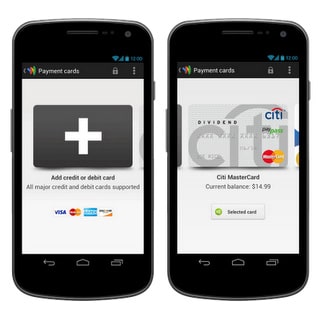
Unlike version 1.0, which needed card issuers to become directly involved in provisioning their payments cards onto the wallet, Google Wallet 2.0 allows a single prepaid MasterCard to be stored on the secure element.

 When a user conducts a mobile payment, this prepaid card draws on a credit or debit card which the user has previously linked to the card account to fund the purchase

Here's how they do it:

To support all credit and debit cards, we changed our technical approach to storing payment cards. The Google Wallet app now stores your payment cards on highly secure Google servers, instead of in the secure storage area on your phone.

 For these transactions, the merchant will not receive your credit or debit card credentials. Rather, Google Wallet will presents the virtual MasterCard card to the merchant.
 
It also could make for much quicker adoption:

This new approach speeds up the integration process for banks so they can add their cards to the Wallet app in just a few week.

 Who are the winners and losers with this?

It does appear that the company we recently highlighted as our "NFC Play" is smack dab in the middle of this major investing wave.

Their extensive IP NFC portfolio could make them the "Next Qualcomm".

 The tool that turned $10,000 into $2,800,000 in 2 years. HowToFindBigStocks.com

Biometric Sensors Will Be In Demand

 Apple's recent purchase of AuthenTec should bring up the valuations of biometric plays.

In the How To Find Big Stocks Newsletter we have several small biometric plays with extensive IP that we think are the next to get bought out.

From NFC News Biometrics necessary on smart mobile devices.

British market research firm Goode Intelligence predicts in its new report “Mobile Phone Biometric Security – Analysis and Forecasts 2011-2015” that mobile biometric security will be an essential feature on all smart mobile devices. 

This prediction builds on Goode’s previous forecasts that the mobile biometric security market would grow to 39 million users by 2015. Apple’s recent acquisition of fingerprint sensor maker AuthenTec supports this forecast.


 The tool that turned $10,000 into $2,800,000 in 2 years. HowToFindBigStocks.com

Sunday, July 29, 2012

What Happens If Retailers Pass The Swipe Fee On To Consumers?


 Every time you use your credit card, the store pays up to 3 percent of your total purchase to the credit card company. It’s called a “swipe fee” and now some fed-up retailers are getting ready to pass this cost on to you, in the form of a surcharge.

CBS New York has an interesting story about retailers passing the "swipe fee" onto consumers.

That’s right, major retailers — from supermarkets to drug stores — may soon be charging you more if you choose to pay for an item with a credit card, instead of paying with cash.

With new mobile payment companies on the scene (Square) and WiFi being used to get around having to use the wireless carrier, this space looks very open for disruption.


By creating a mobile payment application that is verified BY credit cards could cut off the 3% fee completely.

3% on tens of billions in revenue offers a great opportunity for a start up.


The tool that turned $10,000 into $2,800,000 in 2 years. HowToFindBigStocks.com

Monday, July 02, 2012

Apple To Jump Start Another Disruptive Technology


The How To Find Big Stocks Newsletter just recommended a nanocap that represents a pure play for the NFC investing wave.

This tiny company, with an extensive NFC patent portfolio, is being called "the Next Qualcomm"


From NFC News.com 75% of mobile execs say NFC enabled iPhone will cause surge in uptake.

 Seventy-five percent of mobile industry executives think the launch of a rumored NFC-enabled iPhone will cause a surge in NFC adoption, according to new research from M for Mobile.

 M for Mobile’s “Mobile Payments Report 2012-2013” contends that 2012 will prove to be the tipping point year for NFC mobile payments entering into the mainstream.

According to the report, there are already several “pockets” of NFC activity worldwide, including “youthful, web savvy” nations like Poland and Turkey.

Here's the irony. The Samsung Galaxy S III, which is NFC enabled is being called the "iPhone killer".

Find out what company is being called "the Next Qualcomm."

 The tool that turned $10,000 into $2,800,000 in 2 years. HowToFindBigStocks.com

Tuesday, June 26, 2012

Disintermediation Is Coming To The Online Media Industry


One little company has disruptive technology that is set to transform the entire online media space.

Marc Ostrofsky in "Get Rich Click!" says 'Disintermediation: A New World for an Old Idea".

 It means "eliminate the middleman". Through the Internet, a company can deal directly with customers instead of funneling supply through distributors, wholesalers or brokers".

Well the online media industry didn't get that memo yet, but soon will.

 Each piece of media needs to be transcoded so all of the various media players can view it. With the iPhone and iPad some media cannot be viewed at all (Sorry Flash).

In order for the new Hershey's Quik ad to run on all players they have to create SEVERAL versions so every device and every OS can play it. Dumb and antiquated.

Just imagine if websites operated that way with browsers. You would be constantly having to update your Explorer, Firefox, Chrome and Safari. Browsers are designed so they can read any website (URL). In other words it doesn't matter what browser you use to surf the Net.

For content sites like Yahoo, it's not a problem to publish new content because it's mainly text. For video sites and advertising agencies it's very costly to publish new content because SEVERAL version have to be made so ALL devices/OS can view it.

As the video boom grows this becomes an even bigger problem, not because there will be more pieces of video uploaded but because the varying devices that can play video is exploding (smartphones, tablets, DVRs, TVs). More video and more devices/Os creates a huge problem that this little company is solving

That same concept is coming to online media and it's going to transform several multi-billion dollar industries/companies.

Very similar to the ebook industry, where authors could self publish and get their "story" out to the masses without the need of a publisher, the video industry is set to undergo that SAME TRANSFORMATION.

A little company with disruptive technology enables ANY piece of online media to be played WITHOUT a player. No updates or plug ins. No transcoding.

Devices that will be impacted include: cell phones, webcams, surveillance cameras, DVRs,  and TVs. If it creates, distributes or plays video ON or THROUGH the Net, it will be impacted.

The middleman/middlemen, such as the transcoders and content delivery networks will be eliminated.

 Any device and any operating system with an Internet connection can play any piece of media content.

That means Joe Consumer can create, upload and stream any type of online media WITHOUT these middlemen.

Hershey's will need to create JUST ONE version of an ad and will know that it can be played by 100% of the sites they publish it on.

In my book How To Find Big Stocks, I envisioned that soon every person with a webcam or mobile phone with an Internet connection becoming their own TV channel. That time is soon approaching with this technology.

Imagine the possibilities when a video creator can publish/stream his content without the need of a middleman.

We have already seen billion dollar websites/companies once the content creator has control of distribution. Get set for major disruption in the online media space.

This little company already disrupted the recording industry and is set to send shock waves to the online media industry.

If you want to find out what company has this disruptive technology and IP, please visit How To Find Big Stocks Newsletter


 The tool that turned $10,000 into $2,800,000 in 2 years. How To Find Big Stocks.com

Wednesday, June 13, 2012

Will TecTiles Jump Start NFC?


While we wait for point of sale terminals (POS) to be retrofitted to enable near field communications (NFC), could this great idea from Samsung trigger mass adoption of NFC?

Analysts have said the first area for NFC adoption will be ticketing, but I can see numerous uses for NFC with this.
 
 QR codes are so 2010, the new thing could be NFC equipped Tec Tiles? 
(From TechCrunch)

there’s plenty you can do with NFC outside of tap-to-pay, which is why Samsung is introducing TecTiles.

 More info on TecTiles
 
For 14.99 for a pack of five, you can slap these NFC stickers on the steering wheel, by the front door, on the corner of your desk or anywhere you see fit. They’ll allow you to swipe your phone across them and it will automatically adjust itself to predetermined settings or actions that you’ve already programmed in.

So, imagine tapping your phone against a TecTile on your night stand and seeing your phone automatically set an alarm and dim the display to prep you for sleep time.

You can program the TecTiles through a simple, free application on the Google Play store called Samsung TecTiles, and perform the following actions with a tap of your phone:
  • Change phone settings, including Bluetooth, WiFi, ringer volume, brightness, etc.
  • Launch an app
  • Join a WiFi network
  • Show a message
  • Make a call or start a Google Talk conversation
  • Send a predetermined text message, like “I’m on my way” on a steering wheel TecTile
  • Share a contact or business card
  • Open up to a certain address on a map
  • Open a web page
  • Check in on foursquare or Facebook
  • Automatically “Like” something on Facebook
  • Update your Facebook status
  • Post a tweet or automatically follow on Twitter
  • Connect with someone on LinkedIn
 Want to know what we think is the "purest play" for NFC?
 Subscribe today.


 The tool that turned $10,000 into $2,800,000 in 2 years. HowToFindBigStocks.com

Monday, June 11, 2012

A Stat That Could Be Very Disruptive

From Apple's WWDC today.

 400 million app store accounts -- Apple has 400 million credit cards on file. 

I predicted this 5 years ago. 

 The tool that turned $10,000 into $2,800,000 in 2 years. HowToFindBigStocks.com

Sunday, June 10, 2012

The Purest Way To Play Mobile Commerce And NFC


 Do NOT miss this enormous investing wave.

This is the same type of story as Qualcomm.
 (a company with very disruptive technology opted to sell their hardware business and generated millions in revenue by just licensing the technology)

Gartner estimates the market to be $170B and many are calling it the next "gold rush" for ecommerce.The technology is called near field communications, or NFC.

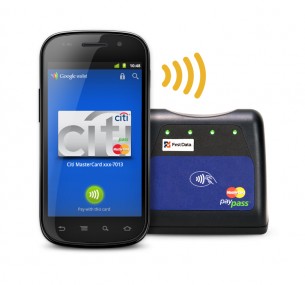
A chip inside your phone will contain sensitive information (credit card, passport, airplane ticket etc) and when the phone is swiped near a point of sale terminal, the data will be transferred enabling a purchase, boarding or entry.

Say goodbye to your wallet. (the stock that has the patents for it here)


As everyone waits to see if Apple decides to include NFC  in their upcoming iPhone, the market is already adopting the technology.

While it may seem like Apple's iPhone is the dominant smartphone, it only represents 7% penetration.

There is NO DOUBT that NFC is where the market is headed. The ability to swipe your phone to make a payment, unlock a door and even cross the border is going to disrupt several industries.

From the June Issue of How To Find Big Stocks:
 (Big Stocks Newsletter)

Just like the advent of the credit and debit cards phasing out the need for cash, NFC technology is definitely capable of eliminating the wallet altogether. When doing a search for NFC and “mobile wallet”, you will see lots of stories from several years ago. Many have said this technology will never get adopted. If Google and Apple can indeed implement this technology in their infrastructure, it will completely disrupt the payments industry. All of these components represent a wave we call “virtual checkout”. The days of waiting in line for a cashier to ring up your goods are coming to an end.

This is the transformation:

The first way and easiest method of adoption will be converting a cellphone into your very own personal wallet. After the cashier scans all of your items, you simply tap your cellphone near the reader (instead of swiping your credit card).

Eventually, you walk into The Gap and scan a pair of jeans with your NFC enabled phone. The confirmation comes back to your mobile screen verifying payment. The store records the item as being paid, turns off the security sensor also embedded on that tag, and out the door you go.  See the potential disruption for the payments industry?

Your cellphone will soon act like a scanner and use the information on it to replace your wallet.

The key thing we look for in a big investing wave, (and we think $170B is a big one), is the company with the competitive advantage in it. They must have some kind of monopoly that allows them to be the dominant player in the space.

A Big Stock for Mobile Commerce

This company has a patent (along with approximately 100 other for NFC) that dates back to 1999 that has both the mobile phone manufacturers and wireless providers concerned. In a nutshell, in order for a mobile computing device and a wireless provider to implement NFC , you're going to have to pay them a licensing fee.

Their patent portfolio is starting to pay big dividends.

One major handset manufacturer just licensed this IP and we expect the others to follow suit. This company also just announced a lawsuit against one of the largest carriers.

Two individuals just filed 13-Ds. Management owns less than 10% of the stock. If there was ever a company poised for a buyout, this is it.

1. trading at less than sales
2. over 50% of their market cap is in cash

(more from the June Issue)

It is our opinion that handset manufacturers and wireless providers will need to license one or more of their patents. We haven’t seen this type of “monopoly” on a transformation for the mobile phone since Qualcomm!


A massive amount of wealth was generated by owning Qualcomm before the mobile phone boom.

There is another huge boom coming when the mobile phone replaces your wallet.

Subscribe to How To Find Big Stocks today and start turning waves into wealth. ($14.99/month or $150 for annual subscription)


The tool that turned $10,000 into $2,800,000 in 2 years. HowToFindBigStocks.com

Thursday, June 07, 2012

Will 3D Printing Disrupt The Patent Industry?

 Could a 3d prototype replace drawings for patents?

Would the prototype show the original concept?

Could the code that is used to create a prototype be submitted as part of the patent?

Let's face it, unless you're a patent attorney or have an engineering background, a patent is very difficult to decipher. Seeing what the patent "does" using a prototype might solve a lot of the issues we face today.

3D Printer has a great story on why 3D printing and inventors may be a perfect match?

To adapt a cliché, one polished, functioning 3D prototype is worth a thousand words during a pitch to potential investors (who can pay for the patenting process, if desired) or a potential retailer.

 Another possible advantage of prototyping is if the product proves less than ideal on use, the inventor can test and optimize. It’s never a bad thing to hit the market with the most functional expression of a new idea.

I wonder how this could affect the patent submission process?

(My view)
3d printing opens a world of opportunity for entrepreneurs and inventors.
"manufacturing" isn't dead in the U.S., it is very much alive. Gone are the days of big buildings making widgets replaced with a 3d printer and a little creativity.


The tool that turned $10,000 into $2,800,000 in 2 years. HowToFindBigStocks.com

Tuesday, June 05, 2012

Don't Miss This Investing Wave


The June Issue of How To Find Big Stocks just highlighted a company with VERY Big stock potential.
In our How To Find Big Stocks June newsletter, we write about the discovery of a nanocap company (less than $100M market cap) that is on the cusp of riding a major upcoming investing wave!  Here are some of last week's newsletter highlights:
________________________________________________

There have been several transformations with the mobile phone (camera chip/ g.p.s chip/ voice recognition), and the Big Stocks associated with each one have generated significant wealth.

With each additional function created for the phone, entire industries, along with new companies were created and destroyed. Can it happen again? We think so!

The latest technology added to the mobile phone will trump them all

It has been called a new gold rush on the next e-commerce frontier and it's currently valued at $170B. (Gartner)
_______________________________________________


Don't miss the investing wave (This major wave could be triggered earlier than expected by ONE event happening in mid-June...learn what that event is, the wave, and the company with the "competitive advantage" in our most recent issue)!
How To Find Big Stocks Newsletter  (subscribe today)

This under the radar nanocap company has already started signing licensing deals for their patents on what we feel will rival one of the largest investing waves to date.  Not only do they provide the hardware for this wave, but also their patent portfolio has been validated by a $7M order by a Multi-Billion $Dollar$ Corporation...the first of what we think are many more orders to come!

We saw this same type of situation with Qualcomm (Remember when Qualcomm was .56 a share?

Subscribers are still enjoying our call in January of Destiny Media Technologies DSNY at .40 a share (with much more upside to come), and we have once again spotted another potential undiscovered jewel with our newest highlighted company!

Wealth changing Big Stocks are ones that have a competitive advantage in a major investing wave. Find out our newest highlighted company today!
Start generating wealth with investing waves!
($14.99/month or $150 for annual subscription)

The tool that turned $10,000 into $2,800,000 in 2 years. HowToFindBigStocks.com

Wednesday, May 09, 2012

What Makes A Stock Big?

Have you ever wondered what makes a stock, truly "big"?

 Technical analysts look for specific chart patterns when they make their "investment".

 Fundamental analysts use ratios (debt/equity, earnings per share) to determine if a stock is undervalued or overvalued.

 Up until now, these two methods have been the 2 most commonly used tools.

 What makes a stock Big?

 A Big Stock has to have a competitive advantage in a major investing wave. It's that simple.

 A company must have some kind of monopoly or a way to corner a market.

 That isn't found in a balance sheet, earnings statement or its stock chart. It is found by specific keywords and phrases that characterize this condition.

 Having a competitive advantage is EXACTLY what made most of Wall Street's biggest winners. Technicians look for double bottoms, or pennants.

 Through 20 years of investing I have compiled a list of specific keywords and key phrases that have helped me identify some of the biggest winning stocks on Wall Street. And I spotted them long before Investor's Business Daily and momentum investors pushed them to dizzy heights.

 Knowing WHAT to look for is key.

 Some of the keywords and why I use them, are outlined in the book How To Find Big Stocks.

 The tool that turned $10,000 into $2,800,000 in 2 years. HowToFindBigStocks.com