Friday, October 31, 2008

GE Smart Appliances Reshape Energy Use


GE Announces Program To Reshape Energy Usage With Smart Appliances

"Now that ENERGY STAR® appliances are recognized by 75 percent of American consumers, the next step is to reshape when energy is being used," said Kevin Nolan, Vice President Technology for GE Consumer & Industrial.ecoimagination

"Peak hour energy demand is growing faster than total energy demand.


It is imperative that we begin to shift some of the energy load from peak hours to other parts of the day -- helping to avoid the need to build new power plants to meet the demand," he explained.

These "smart" or Energy Management Enabled Appliances and the utility "Smart Meters" help consumers manage their utility bills by enabling them to avoid peak hour energy usage and benefit from pricing.

For example, the automatic defrost feature on GE refrigerators is initiated by the internal electronics based on the number of refrigerator door openings and other input signals. If the refrigerator can delay the defrost cycle from occurring during peak energy usage hours, consumers will save money by paying for the same amount of energy, later in the day and at a lower rate.

A pilot program is already underway with Louisville Gas & Electric.


WiFi Thermostats Eliminate Need For Smart Grid


The "Information Superhighway" will connect all types of devices and deliver ALL types of data.

Energy efficiency through telematics is here.

Toronto-based Ecobee thinks it has a winning plan for reducing everyone's cost of heating and air conditioning, while giving utilities greater interaction with customers when needed

From ARS Technica WiFi thermostats set to change energy industry
ecobee
The Ecobee connects to a thermostat through a standard HVAC interface, and hooks in to the Internet via a home WiFi network.

The thermostat regularly synchronizes its data with a secure Web portal.

Once networked, the thermostat can receive alerts, too, from whoever installed the device.

Previous smart thermostats required a smart grid, an electrical network also capable of passing data. Ecobee goes out of band, using the ubiquity of WiFi to pass data. The system can tie into home meters that track usage.

The kicker:

Because utilities pay for more power during peak periods—whether they generate that power themselves or buy it on the open market—being able to send an alert to a customer asking them to participate in backing off usage could have a disproportionate effect.

Thursday, October 30, 2008

FCC Commissioner Says White Space Will Win Approval


White spaces, or as Google's Larry Page calls it,"Wi-Fi on steroids" is close to reality.

A top federal regulator said on Wednesday he is optimistic communications officials will approve a plan, backed by Microsoft (MSFT) and Google, (GOOG) to open soon-to-be vacant television airwaves.

From Investor's Business Daily FCC Commissioner Says White Space Use Will Win Approval

The FCC, made up of three Republicans and two Democrats, is due to vote (Nov 4) on the white spaces proposal drawn up by Republican commission Chairman Kevin Martin.

there is great potential for a new wave of innovative and faster devices to be developed by the private sector with the new spectrum.

I have pondered at great length about the enormous opportunity White Space represents.

One Silicon Valley player is already receiving white space radio orders.

More White Space ponderings.

Visionary Innovations uncovered a small company with modulation techniques (and over $200m in VC funding from Cisco, SBC Communications, US Venture Partners, ComVentures along with $100m from US Govt) that is positioning themselves to be the "Qualcomm of 700MHz and White Space" (modulating standard).

The report is titled "White Space Represents A White Hot Opportunity"

A Smart Grid Relies On Demand Response


SmartGrid offers an Industry News summary
Their take: That new transmission has to be smart and self-healing to better accommodate the stresses of intermittent wind.

NERC cites improving Demand Response and lagging grid

Highlights I found in the 2008 Long-Term Reliability Assessment from the North American Electric Reliability Corp

To consistently validate and measure the results of the demand response programs, NERC is inaugurating a demand response event analysis system (Demand Response Data Task Force), expected to be launched in 2010.

Significant increases in demand response programs over the next ten years are projected to reduce growth in demand and provide ancillary services across North America.

Demand response will become a critical resource for maintaining system reliability over the next ten years.

Though demand continues to grow, new development of supply-side options are becoming increasingly limited – many coal plants have been deferred or cancelled, nuclear plants are becoming more and more expensive, and transmission lines increasingly difficult to site.

Further, demand response also has an important role to play as more variable resources (such as wind) are added to the system. Variable resources, for example wind generation, often need a “dance partner” which can provide operational flexibility to maintain reliability during resource down-ramps that can be ssociated with them.

Demand response can provide all or a portion of the flexibility required for this integration.

Brattle Group consultant Ahmad Faruqui revealed that his firm has updated its 2007 assessment of DR’s present value. The previous assessment, called The Power of Five Percent, concluded that if DR could reduce peak demand by five percent it would produce a benefit stream over twenty years with a present value of $35B.

Since then, says Faruqui, the cost of providing peak energy has doubled. Meanwhile, DR technology costs have come down and regulators have started promoting faster adoption. Even at a five percent reduction, the present value jumps to $66B.

If DR can reduce peak demand by 25%, says Faruqui, the present value is $332B.

2008 Long-Term Reliability Assessment from the North American Electric Reliability Corp

CleanTech Opportunities Offer Inflection Point For American Economic Turnaround


M.R.Rangaswami at Earth2Tech outlines 3 opportunities to set America on a new path.

The resolution of the presidential election next week will be an opportunity for a fresh start.

1. Rebuild the national grid
2. Stimulate the Green Economy
3. Move to a sustainable economy

--------------------------------

America is at a Tipping Point and here are my 6 points (with some government incentives).

1. Reduce our dependence on oil..oil supply is finite. Solar and wind are free and supply is infinite.

2. Utilize our own natural resources (offshore drilling, ANWR) that buys us time (and lowers prices) until renewable energy becomes grid parity or competes with coal.

3. Reduce money going to oil producing countries (terrorist nations) and keep the money within our country (massive trade deficit reduction)..higher GDP,

4. Create millions of jobs (some that include manufacturing)

5. Allow people to be producers of energy in addition to consumers of it (HUGE transformation)..imagine the income change when Joe Consumer can sell power back to the grid while he's working at his job

6. Renewable energy technologies can be licensed to other countries...instead of buying oil, we can sell our own "oil" to other countries.

7. Profits generated by renewable energy companies (instead of foreign countries) can be put back into R&D and the economy.....the money stays here in the U.S.

The Land of Eco-Opportunity

U.K Creates Smart Meter Mandate


The U.K. Government announced yesterday that it will require all households to have smart meters installed over the next decade.

Announcing the mandatory smart meters roll-out, Lord Hunt said: “This is a major step forward; no other country in the world has moved to an electricity and gas smart meter roll-out on this scale.

Wednesday, October 29, 2008

Verizon Sees Physical World Connection With 700 Megahertz Spectrum


Physical World Connection can be static or dynamic.

From Technology Review
Verizon Sees All Kinds Of Devices Connect

"It's about connecting any- and everything that could be connected," Verizon VP Tony Lewis said at the Mobile Internet World Conference.

In addition to cell phones, Lewis expects to see an explosion of devices that connect to cellular networks, such as industrial machinery and home appliances.

He talked about home health monitors that might track, for example, whether an elderly person is taking medicine at prescribed intervals and then notify family members via the wireless network if a dose is missed.

He also talked about home appliances that would automatically send for a repair person if a key part fails, or order new supplies, such as groceries, when they run out.

What Happens When Electric Motors Go Green?


Each year billions of dollars and electricity are wasted from electric motors electricity that can only run at 2 speeds, ON or OFF.

Their inability to adjust power to varying loads, makes them one of the biggest “wasters” of electricity.eSave

Improving motor efficiency is a huge and the easiest to implement untapped “green resource” and represents a multi-billion dollar opportunity.

Power Efficiency has developed a patented and patent-pending technology platform, called E-Save Technology™, which has been demonstrated in independent testing to improve the efficiency of electric motors by up to 35% in appropriate applications.

Electric motors consume over 25% of the electricity in the U.S., and many operate inefficiently.

Power Efficiency is also developing a new product based on E-Save Technology™ for the tens of millions of small motors found in applications such as residential air conditioning, pool pumps and clothes dryers.

The company is working with manufacturers to incorporate this technology directly into new motors and appliances.

Read our complete report on how Electric Motors Go Green

Google's Energy Ideas...What Is A Kilowatt Worth?


Do you roughly know what the price of kilowatt per hour (kWh) is, and that it fluctuates daily?

Would your your consumption habits change if you did?

Informed consumers are efficient consumers.

The N.Y. Times has a piece titled Google's Energy Ideas Might Emerge Under Open Source Licenses

Ed Lu, who works in advanced projects at Google said “the big area that we are looking at is energy information,”.

Buying electricity today, he said, is a bit like going to a grocery store where the items have no prices and where you get billed a month later for your purchases. Some engineers in Mr. Lu’s team, are working on tools to turn energy buyers into more informed consumers, he said.

VCs Discuss Cleantech At Seattle’s Renewable Energy Finance Forum


Gregory Huang at Xconomy gives us his highlights at the Top 10 Takeaways from VCs At Renewable Energy Forum

Key points I found of interest:

Record investment levels in energy

Cleantech isn’t a sector. It’s many different sectors with very different markets

Solar is dead. “We’ve placed our bets in solar already,” said Atluru of Draper Fisher Jurvetson. “You’re going to see solar drop off.

Smart grid is getting a lot of attention from info-tech investors, in part because it’s capital-efficient.

Waste, water, and recycling aren’t getting as much investment as they deserve, but that may change given the enormous market opportunities worldwide

time horizons for exits have increased to 7-9 years, up from 5-7 years not too long ago

The needle has moved from optimism to skepticism in cleantech

The enthusiasm of entrepreneurs in this sector is an order of magnitude higher than any other sector.

the panelists agreed that entrepreneurs are ahead of investors when it comes to dealing with the economic downturn

The full story.

Tuesday, October 28, 2008

700Mhz..The Frequency For Energy Efficiency?


I've discussed how I think the smart meter will be The Next PC.

Smart meters give energy consumers the ability to better manage their individual power consumption. It is the management of energy consumption by individuals that will bring one of the largest sources of carbon emissions in the world under control.

These "mini computers" will need to be connected to the Net continuously,

The question is....Who or what will be the service provider for them?

Data and energy-consumption choices are being offered to consumers like never before.

Utilities are investing in smart meters and advanced metering infrastructure (AMI) at a rapid pace. Engineering giants are partnering with smart grid start ups.

Utilities are deploying smart meter technology at a rapid rate to avoid the difficulty of building and permitting new power plants, to prepare for impending carbon regulation and more importantly because managing electricity use at a granular level opens up new business opportunities with customers.

Efficiency gains achieved by upgrading to a smarter grid from a conventional one would be like switching from a typewriter to a word-processor.

The smart grid is not “one” product, but rather, a solution suite of products and software technologies improving the grid’s overall performance. Thomas Friedman calls it the "Energy Internet".

As the Smart Grid grows, with digital devices (meters, relays, switches, routers, circuits) sending out more and more data, unlicensed spectrum could be the Achilles heel of your communication backbone.

In order for this data to be accurate, it has to be delivered over the Net without latency.

The real problem is that utilities have no dedicated spectrum.

700 MHz spectrum, a former television frequency, can carry between 20-25 miles without relays and requires less power to carry the signal (approximately 1250 sq miles per base station.)

Arcadian Networks provides “last mile” wireless carrier services to the energy sector (electric, water, and gas utilities and oil and gas companies). The company’s 700 MHz licensed spectrum delivers a converged IP network with voice and data communications for fixed and mobile applications.

The real-time broadband communications platform reduces operational costs, improves resiliency, and transforms electric grids into efficient “smart grids” and oil fields into optimized “smart fields”.

Monday, October 27, 2008

The Fingerprint, A Physical World Hyperlink, And Physical World Connection Help Police


fingerprint

How is a fingerprint like a website (URL)?

When an Internet enabled device scans a fingerprint (retrieves a match using a database through the Net) and delivers information, it (fingerprint) has acted as a Physical World Hyperlink.

A computer resolves a machine readable identifier and delivers information through the Web.

From Guardian Police use fingerprints in the street

Every police force in the UK is to be equipped with mobile fingerprint scanners - handheld devices that allow police to carry out identity checks on people in the street.

The new technology, which ultimately may be able to receive pictures of suspects, is likely to be in widespread use within 18 months. Tens of thousands of sets - as compact as BlackBerry smartphones - are expected to be distributed.

What CleanTech Industries Benefit From New Tax Incentives?


From IBD New Tax Incentives Highlight Big Winners In CleanTech

As part of the $700 billion economic rescue package, solar, wind, geothermal, fuel cells and other clean-energy firms received tax incentives that help them compete with traditional forms of energy

Incentives are key for clean energy, which usually costs more to produce than traditional sources of power such as natural gas, coal and nuclear plants.

The clear winners: solar and emerging fuel-cell technology for providing electricity for industrial and commercial buildings.

Even more important, power utilities can now access the tax credit under the new bill. That will help create demand for larger-scale projects that deep-pocketed utilities can roll out, analysts say.

Analysts also point out that wind is closer to becoming competitive with traditional power sources

I've compiled a list of:

Solar Stocks

Wind Energy Stocks

Sunday, October 26, 2008

Internet Of Things..Physical World Connection Right Around The Corner


"In five years it will be hard to find an electronic device that is not connected to the Internet," ZeroG Chief Executive John Cummins predicted.

More than 9 billion micro-control devices are shipped every year, he said, suggesting a huge market opportunity.


Saturday, October 25, 2008

Creating Energy By Efficiency


“the cheapest and most available source of new energy is the energy we waste”...... U.S. Department of Energy Secretary Samuel Bodman

The death of broadband over powerline (BPL) opens up other possibilities.

Another bit of energy efficiency trivia.

Shedding just 5 to 10 percent of utility's load at peak times on demand could reduce or eliminate turning to the expensive spot power market or powering up dirty old power plants.

Shaving that usage can have enormously disproportionate cost and environmental savings.

Improved energy efficiency and so-called demand response programs that curtail power consumption on hot days would reduce North America's total power demand 3.3 percent by 2016.

There's a unique opportunity to become part of the solution-and to profit from it at the same time. By leveraging Internet-enabled electricity load management technologies, businesses can help to save the grid by automatically reducing peak demand during critical periods.

This is all due to this government mandate.


Friday, October 24, 2008

Did You Know?


light bulb
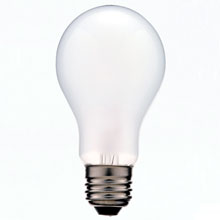
Incandescent light bulbs, which convert heat into light, use only about 2% of the electricity they consume and wasting the rest as heat.

Lighting accounts for nearly one quarter of the world's electricity use, the potential energy savings are prodigious.

The most powerful light-emitting diodes (LEDs), which are not expected to enter commercial production until 2010, use only a fraction of the electricity used by incandescent bulbs and often outperform compact fluorescent bulbs in terms of energy efficiency.

The U.S. plans to ban the bulbs beginning in 2012.

Here are some more Bright Ideas For Lighting


U.S. Department Of Interior Launches Geothermal Energy Initiative


geothermal
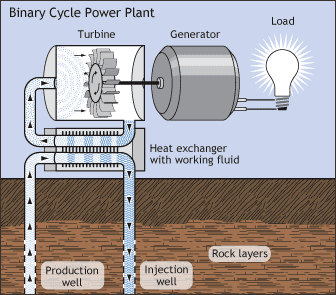
Secretary of the Interior Dirk Kempthorne today announced a plan to make more than 190 million acres of Federal land in 12 western states available for development of geothermal energy resources, an initiative that could increase electric generation capacity from geothermal resources ten times over.

Under the development scenario outlined in the plan – known as the Final Geothermal Programmatic Environmental Impact Statement – the initiative could produce 5,540 megawatts of new electric generation capacity from geothermal resources by 2015.

That’s enough to meet the power needs of 5.5 million homes. The plan also estimates an additional 6,600 megawatts by 2025 for a total of 12,100 megawatts – enough to power more than 12 million homes.

Clean Energy Will Depend On A New Smart Grid


smart grid
Renewable energy is only as effective as the infrastructure that moves it around: the electrical grid.

Parts of the current grid are over a half century old, predating the personal computer.

From WSJ Renewables Need A Smart Grid

Even at today's levels, renewable energy is straining an electrical grid already showing signs of fragility.

The current electric grid has two basic shortcomings.

It's not big enough to accommodate all the new electricity the nation is likely to need in coming decades,regardless of how that electricity is produced. And it's not flexible enough to handle the inconsistencies of renewable energy, which is less steady than the workhorses of coal and natural gas; the wind doesn't always blow, and the sun doesn't always shine.

Thursday, October 23, 2008

The Most Revolutionary Phase Of All...Physical World Connection


When every physical object is, or can be connected to the Internet, ie (Physical World Connection), is when a revolution occurs.

Some call it the "Internet of Things", I also call it the Internet Phase 2.

Cars, refrigerators, billboards, tennis rackets, water heaters, digital cameras, stop signs, airplanes, sprinkler systems and any physical object you can think of, will soon be "connected" to the Internet. This occurs with various types of Physical World Hyperlinks.

A Physical World Hyperlink is any sensing device (RFid, GPS, ZigBee etc) or a machine readable identifier (barcode, image, sound etc) that when initiated or scanned provides an Internet connection (or a connection through the Net).

The ability for devices (more than PCs and mobile phones) to connect (or have the ability to connect to the Net) will offer some exciting applications. The ability for individuals and corporations to connect/interact via the Net, created new multi-billion dollar companies/industries (Google, eBay, Amazon, YouTube). This also allowed economies to become so much more efficient.

The areas to watch for Physical World Connection:

1. software/hardware (solution) that resolves any type of physical world hyperlink

2. a "registry" for domains that will be issued for every device (that will dwarf the number of website domains)..like Verisign

3. a network provider that can ensures a secure network for these devices (it's one thing if your website is hacked, it's something completely different if your machinery or car is)

4. a delivery system/platform that can move any sized data from a physical object through the network (what good is having objects connected and providing data if they cant transmit and receive it)

On the advertising side of PWC here's how Google Can Connect The Physical World

Even Microsoft is developing the RFID browser.

Internet enabled everything

In the 15 years since Sir Tim Berners-Lee invented the World Wide Web, the life of almost everyone in the industrialised world has been touched by it. But just as many of us are getting to grips with its second stage, the mobile internet, few are prepared - or even aware - of the third and potentially most revolutionary phase of all: the internet of things.


Wednesday, October 22, 2008

Rent A Solar Panel For Your Home


What a great idea.

From CNN Money Solar power your home, for cheap

A Silicon Valley startup rents solar panels to homeowners - a strategy that is both cost-effective for customers and, thanks to generous tax breaks, a boon to its bottom line.

"The biggest barrier for solar is the upfront cost," said Lyndon Rive, CEO of Foster City, Calif.-based SolarCity.

Rive's company may have hit on a solution. Instead of selling solar panels to homeowners, SolarCity's main business is leasing the panels. The consumer pays SolarCity a monthly lease payment - about $75 for a 2.8 kilowatt system - which, when combined with his newly-lowered electric bill, typically adds up to a savings of 10% to 15%.

SolarCity does all the installation work, and there's little risk for the consumer since SolarCity guarantees a minimum level of power production.