Showing posts sorted by relevance for query apple. Sort by date Show all posts

Tuesday, December 11, 2007

With $15 Billion, What Should Apple Buy?


Last week it was announced Apple had been saving a bit of money. Lots of speculation on what Apple should buy.

From 9to5Mac 15 Billion Dollars What Will Apple buy?

ARS Technica sees Adobe, TiVo and Nintendo as possible candidates.
iPhone
9to5 Mac suggests telecom related companies: ClearWire, Skype, or Apple bidding on the 700 MHz spectrum.

What do I think Apple should buy?

Apple's iTunes and their variety of products allow anyone to download, carry, and play content. iTunes has developed into a content portal, but why couldn't it be a commerce portal as well?

Apple generates revenues by selling products (iPod, Nano, iPhone etc) that play content, and by selling the content itself through iTunes. Music, videos and and various types of tickets (concert, plane, coupons) are purchased and downloaded through iTunes.

Millions of Apple "real world" (mobile) devices get connected to a PC and to the Apple portal (iTunes) making Apple a true m-commerce player. Apple needs a financial platform to support this. Millions of transactions occur through iTunes (and soon through the Iphone), Apple should want to get a cut of this.

For the right price, would eBay ever consider selling PayPal?

What do you think Apple should buy?

Tuesday, January 09, 2007

Apple's iPhone Offers More Than A Phone But A Killer Platform

Apple probably has to go down as one of the first companies to link the physical world with the Internet.

When you download a song on iTunes from the the Net, and then transfered to an Ipod (mobile device), indirectly and in reverse order you created a physical world connection.

Apple and iTunes got millions of people (especially the targeted demographics) to link a mobile device to their PC. The disruption isn't in the iPod or the Nano, but in the iTunes platform. I think the same thing will occur around the platform for the iPhone.

I see the iPhone being more than just a communication device that surfs the Net and holds music. An iPhone pplication could provide the platform for two of the fastest growing industries, mobile marketing and mcommerce.

An iPhone application on the PC could link your mobile world to your PC. iPhone

If Apple can make it as easy to interlink a mobile phone and a PC (like they do with iTunes and an iPod), they could become a mobile marketing and mobile commerce powerhouse .

I know iPhone won't be the name of Apple's new phone, but I use the term because it's easy to identify.

Apple could do what every wireless carrier dreams of, tying your PC world with your mobile world. iTunes provided the conduit for the PC and mobile worlds. The iPhone will provide the Internet access.

Your iPhone application on your PC becomes a place where you store all of your mobile search requests, text messages, pictures, phone calls (think voIP applications), mcommerce transactions (soon). Yes a universal remote control but with a website that allows control and review.

How many times in the last 6 mos have you logged into your wireless account online?

I have often wondered why wireless carriers don't spend more time marketing a "MyCell" webpage. They are sitting on an advertising and customer relationship goldmine but they are ignoring it.

Apple Computer Inc. will finally end the rumors and announce a cell phone today with wireless service from Cingular Wireless LLC, a news report said.

Apple and Cingular team up for cell phone

Rather than tie itself to a single service provider, Apple is likely to introduce an “unlocked” phone that can be used on different networks.

Would you allow Apple to deliver ads on your iPhone if they compensated you with extra minutes?

Apple can provide a billing platform for movie tickets, coupons, airline tickets.

Go to iTunes or the iPhone application, download a ticket for Jimmey Buffet concert and get a 2d code, barcode on your iPod/iPhone. The billing is ALREADY IN PLACE and you just wave your iPod/iPhone at the door.

Apple has already tapped into a Physical World Connection application

Just imagine the possibilities if the iPhone has a camera too.

Thoughts comments?

Saturday, October 27, 2012

Stories I Found Of Interest (weekly)

    • Apple stopped including pre-installed versions of Java in OS X and instead gives users the option to install the framework. More recently, Apple issued an update that turns off Java in the browser when users haven't used it recently.
    • The Company has agreed to register all shares of Common Stock underlying the Preferred Shares and the Warrant under the Securities Act of 1933, as amended (the "Securities Act") pursuant to the registration right agreement attached hereto as Exhibit 10.4 (the "Registration Rights Agreement"). On October 26, 2012, the transaction was approval by the NYSE MKT
    • Apple Inc. (NASDAQ:AAPL) to remove Java from the Macintosh operating systems 


       The newest updates of the Macintosh operating system will make sure that all the versions of Java be removed from the system. Apple Inc.(NASDAQ:AAPL) made this announcement on Friday. Apple, on the official support site revealed that Java script will be removed from their native operating systems, since experts have recently discovered that the Java bugs help attackers infiltrate the security of the system and get information. This discovery was made in August, when the experts had conducted the experiment by launching attacks through the bugs found in Java. They were successful.
    • Apple (AAPL) is removing old versions of Oracle's (ORCL) Java software from Internet browsers on the computers of its customers when they install the latest update to its Mac operating system.
    • Apple is implementing that change in the wake of a Java


      Advertisement

      security scare that prompted some security experts to caution computer users to only use Java on an as-needed basis.

      Security experts in Europe discovered Java bugs in late August that hackers had exploited to launch attacks. It took Oracle several days to release an update to Java to correct those flaws.

      Adam Gowdiak, a researcher with Polish security firm Security Explorations, said on Friday that he has since found two new security bugs in Java that continue to make computers vulnerable to attack.

    • DRM is a generic term for a suite of technologies that, in theory, allow people to control how others use digital information.  DRM is usually applied to things protected by copyright (like movies on DVD) in the hopes of preventing unauthorized copying.

      DRM is problematic for many reasons, but two are particularly relevant to this discussion.  First, almost by definition, DRM cripples the functionality of devices or programs, making them defective by design.  As applied to 3D printing, DRM could transform a general purpose tool capable of making anything into a specialized tool that can only be used to create a handful of pre-approved items.  Such a transition at this point could cripple the growth of consumer 3D printing
    • Academic researchers have improved wireless bandwidth by an order of magnitude—not by adding base stations, tapping more spectrum, or cranking up transmitter wattage, but by using algebra to banish the network-clogging task of resending dropped packets
    • If the technology works in large-scale deployments as expected, it could help forestall a spectrum crunch
    • The new Cyclops 6 demonstrates the power of the Visualant ChromaID(TM) technology, which reads, records and analyzes invisible chromatic identifiers in gases, liquids, solids and surfaces. The technology promises to spawn a new wave of consumer and industrial applications replacing old spectral analysis techniques found in expensive science labs and making them more accessible to people in the field
    • technology, which reads, records and analyzes invisible chromatic identifiers in gases, liquids, solids and surfaces. The technology promises to spawn a new wave of consumer and industrial applications replacing old spectral analysis techniques found in expensive science labs and making them more accessible to people in the field
    • The people who are right a lot often change their minds. Bezos said he doesn’t think consistency of thought as a particularly positive trait. It’s better, even healthier in fact, to have an idea that contradicts one you had before.


      The smart people constantly revise their understandings of a matter. They reconsider problems they thought they had solved. They are open to new points of view, new information, and challenges to their own ways of thinking.

Posted from Diigo. The rest of my favorite links are here.

Saturday, September 29, 2012

Stories I Found Of Interest (weekly)

    • Pictures beat words: In August, U.S. smartphone owners visited Instagram from their smartphones more frequently and for longer periods of time than they visited Twitter.
    • While Twitter may have had a greater number of smartphone users visiting its site (via the mobile Web and via Twitter apps), Instagram’s users appear to be returning to the site on a more frequent basis, and spending longer on the site each time they return.
    • Above all else, it speaks to the ongoing mobile issues of Facebook, now the parent company of Instagram. The massive shift in user traffic to mobile devices is a real thing, and Facebook seems to now hold an asset in the highly popular Instagram. The trick now, however, is to figure out a way to effectively monetize Instagram and the Facebook mobile experience.
    • o be clear, using the app for what it’s advertised for — scanning barcodes — works as intended. But getting to that point was more complex than expected. In all, the app feels incomplete and perhaps rushed. In other words, it doesn’t feel like an Apple product yet.
    • the map mess demonstrates why circumstances are turning against Apple's current business model. Simply, content is king again. However much it might benefit Apple's business model to force users to patronize its own maps app, the company won't get far in trying to deny them Google's far superior app. Apple for a while managed to tame the power of content and make it subservient, but that day is coming to an end.
    • there is no solution to TV that will let Apple keep doing what it has been doing
    • Apple's fans imagine the company can do for TV what it did for music: breaking up the existing distribution model. Forget about it. Television is about to demonstrate the inadequacy of Apple's own business model.
    • Video-content owners aren't looking for a savior and ultimately won't be satisfied with anything less than an open ecosystem accessible by any device
    • To maintain its position, the company will have to focus more on giving its devices superb access to content it doesn't control and hasn't approved.
    • Consumer tracking service NPD says TV sets are now the most popular way to watch streaming video.
    • 45 percent of consumers report that TV is now their primary Web video screen, up from 33 percent last year
    • he software giant's new NFC-enabled wallet at the NFC World Congress last week
    • "Is there a huge amount of money in this?", he asked, regarding Microsoft's adoption of NFC. "Probably not. But think about it in terms of getting consumers and developers interested.
    • 'there's nothing as vulnerable as entrenched success.' And the auto industry, in particular General Motors, was so successful for so long that it didn't recognize the need to innovate, to become more productive, to become more efficient, or it would ultimately be vulnerable to foreign competition.
    • Iran plans to switch its citizens onto a domestic Internet network in what officials say is a bid to improve cyber security but which many Iranians fear is the latest way to control their access to the web.
    • Facebook is working with a controversial data company called Datalogix that can track whether people who see ads on the social networking site end up buying those products in stores.
    • Facebook is gradually wading into new techniques for tracking and using data about users that raise concerns among privacy advocates
    • Datalogix has purchasing data from about 70m American households largely drawn from loyalty cards and programmes at more than 1,000 retailers, including grocers and drug stores. By matching email addresses or other identifying information associated with those cards against emails or information used to establish Facebook accounts, Datalogix can track whether people bought a product in a store after seeing an ad on Facebook.
    • Facebook users are automatically included in the advertising studies conducted with Datalogix, and cannot directly opt out through their Facebook account. Instead, they must go to the Datalogix website, for which Facebook has a link posted in its help centre
    • Starting today, you can Shazam any TV show on any channel. And advertisers hope you'll soon be doing the same for commercials.
    • Shazam is aiming to make the second-screen experience so compelling, you'll start Shazaming commercials as you would shows or songs. For its 140 brand partners, which include companies such as Procter & Gamble, Progressive Insurance, and Pillsbury, Shazam is offering access to engaged users and minimizing friction between advertisers and their potential consumers.
    • Shazam has the unique advantage of well-established relationships with all the major TV networks, as well as massive reach, which means massive amounts of invaluable user data. Shazam is adding 2 million users a week and logging 10 million content tags a day. Combine those numbers with information users can choose to share with Shazam and you get a gold mine of data that reflects when those users are Shazaming commercials, what kind of content they interact with the most, and what really gets them to engage with a brand. And all of that means new revenue streams for Shazam, who can neatly feed that data back to networks and advertisers to help them make more informed choices about the content they produce.
    • The concept is not entirely new. Anyone following the mobile landscape for the past year has seen the progress of the second screen, the ability to tie in your handheld mobile device or tablet and have it provide information about the current programming you may be watching on your big screen. Advertisers are especially enamored by the concept because as consumers are whizzing by commercials on their DVRs, they often have their portable devices in their hands or at least close by. Several other apps have used sound recognition to accurately discover what show is currently playing and then load up relevant information, along with a dose of content-specific advertising. Want to buy the dress that the star of the sitcom is wearing? Here’s a quick link to a sale at JCPenney. Watching the game and looking for team jerseys? It’s now a click away via your mobile device on game day, during the game. While various apps have had some success, none have really broke out of the pack. The key point with Shazam is that it opens the gates to new second-screen technology to a huge base of users, most of which may never go hunting around for a content recognition app but may indeed use one if the software they already have includes it.  
    • Shazam makes things easier because really all you have to do is hold the device up in the air, and the app will quickly capture the information from the entertainment you are now consuming. 
    • The rapid shift in Facebook's user base to mobile platforms—more than half of users now access the site on smartphones and tablets—appears to have caught the company by surprise
    • Facebook (ticker: FB) founder and CEO Mark Zuckerberg must find a way to monetize its mobile traffic because usage on traditional PCs, where the company makes virtually all of its money, is declining in its large and established markets. That trend isn't likely to change.
    • Anyone who owns Facebook should be exceptionally troubled that they're still trying to 'figure out' mobile monetization and had to lay out $1 billion for Instagram because some start-up had figured out mobile pictures better than Facebook
    • we're a completely new kind of marketing. We're not TV. We're not search. We're a third medium."
    • Most of those mobile-only users probably are under 25, and it's within that group that Facebook is seeing reduced usage on PCs.
    • the declines were sharpest among users aged 12 to 17 and 18 to 24, which saw drops of 42% and 25%, respectively. Time spent on Facebook by PC users aged 55 and older was up sharply.
    • "The paradigm shift to the app model is unequivocally bad for Facebook
    • According to Venture Beat, AmEx is launching integration with Passbook later today.

Posted from Diigo. The rest of my favorite links are here.

Saturday, August 25, 2012

Stories I Found Of Interest (weekly)

    • Botanical DNA can also be used in combination with wireless tracking technologies such as RFID as a way to ensure that those devices are not copied or tampered with. As guitars are botanically DNA-marked in quantity, forensic authentication by our labs, both as a quality control measure and also testing of products already in the field, can prove in time to be a strong anti-counterfeiting platform.
    • In a blog post, Robert Scoble said while Samsung will take a big PR hit and lose $1 billion, it was worth it to copy Apple because it vaulted the company ahead of other smartphone rivals. Samsung also sells an array of products that Apple doesn’t and setting up the comparison with Apple worked out well for the entire company, Scoble said.


      “It only cost $1 billion to become the #2 most profitable mobile company. Remember how much Microsoft paid for Skype? $8 billion. So, for 1/8th of a Skype Samsung took RIM’s place and kicked HTC’s behind…I bet that RIM wishes it had copied the iPhone a lot sooner than it did. So does Nokia, I bet. Samsung is a much healthier company than any of those BECAUSE it copied the iPhone,” he wrote.


    • “The PR upside is that now people associate Samsung’s phone at the same competitive set as Apple’s. I just did a Google search for “Apple phone” and there are multiple Samsung links on the second half of the page. PR win: Any phone Samsung launches will be super hyped — and compared to Apple,” he wrote
    • Samsung said the verdict should be viewed "as a loss for the American consumer."
    • It will lead to fewer choices, less innovation, and potentially higher prices," the company said in a statement. "It is unfortunate that patent law can be manipulated to give one company a monopoly over rectangles with rounded corners, or technology that is being improved every day by Samsung and other companies.


      "Consumers have the right to choices, and they know what they are buying when they purchase Samsung products. This is not the final word in this case or in battles being waged in courts and tribunals around the world, some of which have already rejected many of Apple's claims. Samsung will continue to innovate and offer choices for the consumer."

    • New Fed Court Info. NOTICE of Hearing:Markman Hearing RESET for 9/10/2012 09:00 AM in Mag Ctrm (Marshall) before Magistrate Judge Roy S Payne. (jml) (Entered: 08/24/2012)So we're back to 9am. still same date
    • My presidency would make it easier for entrepreneurs and small businesses to get the investment dollars they need to grow, by reducing and simplifying taxes; replacing Obamacare with real health-care reform that contains costs and improves care; and by stemming the flood of new regulations that are tying small businesses in knots
    • Bain Capital helped build a new steel company, Steel Dynamics, which has grown into one of the largest steel producers in America today, holding its own against Chinese producers. The key to its success? State-of-the-art new technology.
    • Here are two lessons from the Steel Dynamics story: First, innovation is essential to the competitiveness of U.S. manufacturing. We are the most innovative, entrepreneurial nation in the world. To maintain that lead, we must give people the skills to succeed.
    • Earlier this month, Wilson and a small group of friends who call themselves “Defense Distributed” launched an initiative they’ve dubbed the “ Wiki Weapon Project.” They’re seeking to raise $20,000 to design and release blueprints for a plastic gun anyone can create with an open-source 3D printer known as the RepRap that can be bought for less than $1,000.
    • Facebook revealed some big, big stats on big data to a few reporters at its HQ today, including that its system processes 2.5 billion pieces of content and 500+ terabytes of data each day. It’s pulling in 2.7 billion Like actions and 300 million photos per day, and it scans roughly 105 terabytes of data each half hour.
    • VP of Engineering Jay Parikh explained why this is so important to Facebook: “Big data really is about having insights and making an impact on your business. If you aren’t taking advantage of the data you’re collecting, then you just have a pile of data, you don’t have big data.” By processing data within minutes, Facebook can rollout out new products, understand user reactions, and modify designs in near real-time
    • By contrast, Clipstream® content is only  encoded once, eliminating transcoding altogethe
    • Under a new partnership being announced with Discover, PayPal is super-sizing the number of U.S. merchant locations it will be accepted at — more than seven million.
    • In ranking the two deals, Ken Paterson, VP of Research at Mercator Advisory Group, says he would guess that PayPal’s deal is potentially larger. ”It could bring PayPal to the majority of card-accepting merchants across the country
    • Bill Gates is among the investors putting a total of $12 million into a new Seattle-area company, Kymeta, that plans to produce high-tech antennas to make it easier to establish a broadband connection between satellites and moving vehicles such as cars, airplanes and boats.
    • new disruptive video technology is available to view at http://www.dsny.com/g2 .
    • Clipstream® G2 is a new cross platform streaming video format which will play directly, without a player plug-in, on smart phones, desktop and laptop computers, tablets, e-readers and any other device with a standards compliant browser.  Once encoded into G2, the files and web page code are uploaded onto any brand of web server. This simple, standards based approach makes it easier to protect and secure content, enables nearly 100% of the viewers to stream the video and reaches many times as many viewers with the same infrastructure and bandwidth as other solutions
    • By contrast, Clipstream® content is only encoded once, eliminating transcoding altogether.
    • This recycling of streams can have a tremendous impact on cost and reliability.  In 2012, Accustream research estimated that $3 billion per year is spent on outsourcing hosting to content delivery networks. 
    • Every company that makes a browser has been hard at work to support HTML5 capabilities. That includes Google Chrome, Apple Safari, Microsoft Internet Explorer and Mozilla Firefox as well as smaller browser makers like Dolphin and Opera. Facebook has become a big supporter of HTML5
    • Scientists have found a way of predicting an individual's future movements by analysing information their mobile phone
    • They compared data from one individual and their closest social network to  predict a person’s future location based on places and areas visited in  the past and the frequency of contact between those studied,
    • In terms of marketing it means that advertising agencies will be able to target individuals with personalised advertisements using information about where the person has been and where he or she might be going.
    •   Doctors might soon be "prescribing" smartphone apps as well as pills, with insurance companies already demonstrating a willingness to pick up the tab. A handful of apps even have FDA approval as medical devices, including DiabetesManager system from WellDoc and an ultrasound product from MobiSante
    • Companies like Apple, Nike and Sony, along with dozens of start-ups, hope to strap a device on your wrist.
    • The new wrist devices won’t replace smartphones, but rather connect to them. Most will continue the basic task of telling the time, while eliminating the need to dig a smartphone out of your pocket or purse.
    • It is the extension of the phone that is appealing. “The wrist becomes a remote screen where you now have the ability to control your phone with a number of different applications,
    • Meanwhile, since 2008, a staggering 3.6 million Americans have been added to Social Security’s disability insurance program. This is one of many ways unemployment is being concealed
    • Only in the Obama Administration......can we have the two people most responsible for our tax code, Timothy Geithner, the head of the Treasury Department and Charles Rangel who once ran the Ways and Means Committee, BOTH turn out to be tax cheats who are in favor of higher taxes.
    • Which begs the question...are YOU a Maker or a Taker?
    • In the last six months of 2011, 798 daily deal sites shut down, according to Daily Deal Media, which researches the industry
    • It devalues your product,
    • But a broader opportunity exists: using the data of payments to build a more valuable, more defensible business model, one not dependent on fees. The result will revolutionize offline commerce and online advertising.
    • But basic “acceptance of credit cards” is becoming a commodity where prices will keep going down
    • It comes down to something rather simple: Connecting the bank accounts of buyers and sellers will never be as valuable nor defensible as connecting buyers and sellers.
    • In an increasingly cashless society, the answer is pretty clear: the payment infrastructure. Tracking that purchase back to the originating source (Google? Yelp? Patch? etc) is known as “closing the loop” and will revolutionize offline commerce and advertising alike.
    • Google’s Motorola unit just filed a new patent-infringement lawsuit against Apple with the U.S. International Trade Commission (ITC) in Washington. According to this report, Motorola’s complaint seeks to block Apple from importing the iPhone, iPad, iPod Touch and “various Apple computers.

Posted from Diigo. The rest of my favorite links are here.

Wednesday, December 07, 2011

Could This Be Big Problem For Apple?

 Apple loses iPad trademark case in China

Therefore, Apple had no rights to the iPad trademark in China, said the report.
 
In 2006, the Taiwanese company sold the "global trademark" for iPad to U.S. company, IP Application Development, which was later believed to be a front for Apple, said the CNET report. When Proview Electronics ran into financial trouble and its assets in China were seized, its creditors attempted to sell Proview's trademarks but Apple stepped in and sued Proview to force it to hand over the trademark in China to IP Application Development.

In 2010 when the iPad was first announced, Apple did not own the trademark of iPad in the United States. It took some weeks for Apple to negotiate with Fujitsu before the Japanese company turned over the trademark to Apple.
 
 
Find out the biggest investing trends and the companies that will play key roles in them. HowToFindBigStocks.com

Saturday, December 31, 2016

Why Apple Is Overvalued And Destined For Hard Times


Yes, we love Apple and their products...but they are still thinking "local" and it is going to cost them dearly.

From the ability to carry around all of our music IN the iPod to the neat way of running applications ON our phone, Apple has clearly nailed this strategy...

However, this is their downfall.

Content and computing are shifting from being ON the device to IN the cloud and when your business depends on selling high end consumer devices, that is going to be a very big problem going forward.

Adding a camera was a pretty big step for the mobile phone. Then the creation of the app store and all of the wonderful things you could now do with a phone, was a boom for many people/industries.

Where are we going?

It is called cloud computing because the computing is done on the cloud, not the device. The applications and content will be accessed and run in the cloud and not on the device.

So when you're selling a phone for $800, when YOUR COST is $200, but the true cost of just the hardware is $25, that's a very problem for your business.

Apple, and others, should look very closely at Google and their Chromebook to see where the future is headed. The number one selling laptop isn't a laptop at all, it's simply a connection to the cloud.

Indeed Microsoft sees the future and thinks it can give the Chromebook a run for its money with the recently announced partnership with Qualcomm

The next "must have" mobile phone will be a "cloud phone", or something very similar to Chromebook capability in a mobile phone size. A simple device, costing under $100 that just accesses the cloud for your content and applications. You drop it or it gets stolen, no big deal. The battery life will be days now that unnecessary applications dont need to be running constantly. The bandwidth used will shrink (telecoms will love).

I can have access to IBM's Watson and high powered graphics, there is NO point in keeping the computing on the device any more.

The days of different app stores will be a thing of the past and Apple's iTunes gold mine will end fast. Why do I need to download the Facebook app from several stores for different devices? App stores are just glorified browsers and who pays for those?

In 2007 I discussed how Apple could introduce an iTunes browser and become an ecommerce powerhouse, Amazon beat them to it.

In 2010, I stated how Apple could turn their iTunes into the "killer platform" and be a cloud pioneer, but they sacrificed future for device revenue.

The shift from websites to apps that run websites fragmented many industries..that all changes. One app that runs on all devices. Period.

Kodak didn't see the shift from analog to digital. Apple isn't seeing the shift from local to the cloud.


Wednesday, June 27, 2007

Apple's iPhone...Could They Introduce An iTunes Browser And Create An ECommerce Powerhouse?


The Apple iPhone arrival is almost here.

I thought it would be a good time to jot down some ponderings about what the iPhone could provide for mobile marketing and Physical World Connection.

In my opinion, it's not the phone itself that will be a huge success, it's that Apple is tying in their iTunes platform (PC) with a mobile device.

The iPhone could be "the" universal remote control that ties in a website for control and further review.
iPhone

If Apple can make it as easy to interlink a mobile phone and a PC (like they do with iTunes and an iPod), they could become a mobile marketing and mobile commerce powerhouse .

A user with an iPhone interacts with the physical world, outside of the PC world. (mcommerce, barcodes, text messages, maps, alerts, phone calls etc). They "dock" their iPhone into their PC and pass/store their mobile world activity into the iTunes platform.

Your Physical World Connection activity (mobile phone) can now be presented on the iTunes platform creating exciting opportunities.

This product/service could be a mobile marketer's dream.

Outside of the phone itself, why could Apple become a mobile marketing powerhouse?

Ecommerce billing method is already resolved with iTunes, and the platform is so easy to use.

I am already thinking of the link the iPhone could provide with TV and Internet advertising. It's not hard to see how the iPhone could be a universal "remote".
Remember, more shows are offering to sell episodes thru iTunes.

Bring your iPhone home and upload/download activity (surfing, text, email pictures, calls) and content to your PC. Advertiser can place relevant ads.
iTunes
Keep a record of your text messages, and all of those links sent via text that you couldn't really open using your mobile. Advertisers place ads next to relevant text messages.

So will Apple introduce an iTunes browser and complete the circle?

I see an iTunes browser that allows a user to search, buy and "work" with the activity generated on the iPhone. Also an iTunes browser will allow ecommerce to be facilitated easier (billing platform) with other merchants. Pay with iTunes or iBill.

Mobile Ticketing.
Apple can start selling tickets (movie, airline) through the iTunes platform. A barcode can be sent to the phone and presented at the door.

Pictures.
The pictures taken with phone are uploaded to the PC for numerous interactive and advertising options.

Apple has already started to use QR codes in their advertising too. All of those 2d codes that an iPhone scans can have another dimension to them. Not only will the user be directed to the URL when iPhone scans the mobile code, but your Physical World Connection activity will be recorded on iTunes. This allows you to get more information about a product using your PC and advertisers (2D code owners) will be able to continue the interaction with the user on the bigger screen.

This will make mobile codes even more valuable.

Other ponderings about the iPhone

Wednesday, February 01, 2017

What Apple Should Spend Some Of That $246B On


Google's motto is "Don't Be Evil".

Apple likes to "Think Different".

Apple's new slogan should be, "Making the next generation even better"..here's how you do it.

Apple, every kid in this world has bought SEVERAL products of yours, I think it's time to give some of that profit back, in a very productive way.

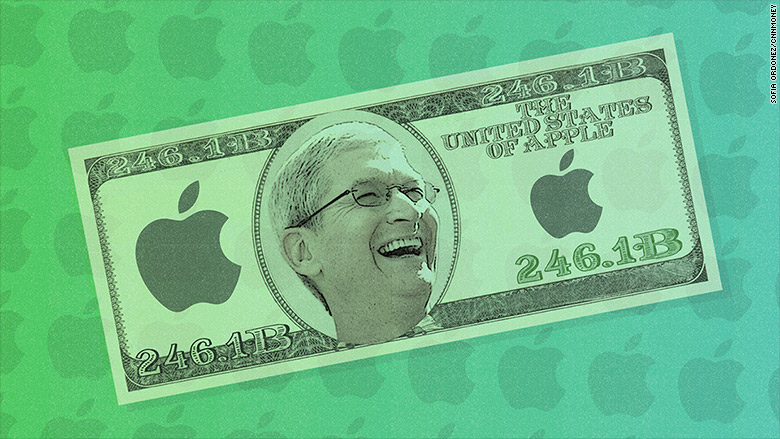
Apple has $246B in cash sitting offshore. President Trump wants it back on this side of "the wall".

Silicon Valley is all up in arms about the immigration issue. They all fear they might lose some talent or be prohibited from poaching from other countries. We have the brightest minds in the world but they are being taught the skills to survive in an analog world.

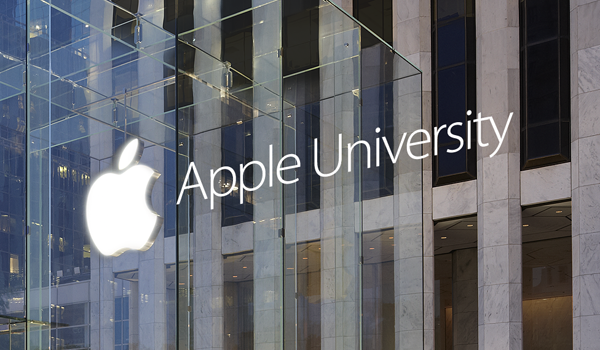
Take $10B and start the Apple University.


 M.I.T, Harvard, Stanford.....and now Apple.

Teach the next generation the necessary skills (computer, math, physics etc) needed to survive in the new digital job marketplace.

What kid wouldn't want to go to THAT school?

The winners in the next generation will be kids that create, not regurgitate facts (that's why we have Google). Computers and software are great at processing but they lack the ability to create. THAT is the skill our kids should be learning.

Apple could even abolish the current testing standards and create new ones.

Think of the possibilities.


Thursday, March 30, 2006

Apple The Mobile Marketing Powerhouse?

I mentioned previously that Apple could turn into a mobile powerhouse with some innovation.

Apple could provide the link between the PC and the mobile (and other mediums) using an iPhone with iTunes. This product/service could be a mobile marketer's dream.


IBD has a story Apple iPhone Is Near

An Apple wireless phone and service will debut late this year or early next, say analysts and industry observers.

The iPod and computer maker is in talks to buy excess network capacity from one of the big wireless phone service providers, says one person familiar with the talks.

Apple would resell minutes to its customers. That would make Apple a mobile virtual network operator

At one point, Apple worked with Nokia to develop a traditional cell phone, analysts say.

How could it be so powerful?

Billing method is already resolved, and the iTunes platform is so easy to use.

iTunes provides the conduit for the PC and mobile worlds .

I am already thinking of the link the iPhone could provide with TV and Internet advertising. It's not hard to see how the iPhone could be a universal "remote".
Remember, more shows are offering to sell episodes thru iTunes.

Bring your iPhone home and upload/download activity and content to your PC.

Keep a record of your text messages, and all of those links sent via text that you couldn't really open using your mobile.

What's next, an iTunes browser?

I have lots of thoughts on what mobile marketers could do with this.

Thoughts comments?

Saturday, March 23, 2013

Stories I Found Of Interest (weekly)

    • Thanks to a tiny new medical implant, doctors of the future might be just fine with that.


      A team of scientists from the Ecole Polytechnique Federale de Lausanne(EPFL) have developed a miniature electronic device that can be implanted under the skin to provide immediate analysis of substances found in blood.

    • NFC is available on only a few dozen phones—meaning it is in few consumer hands—and it is not on iPhone," reports MainStreet.com. "Nor is it, as far as anyone knows, on the iPhone roadmap for near-term deployment. Merchant adoption of NFC readers also has lagged, with only a handful of national retailers (and few local stores) offering the capability. Even if you have an NFC phone, there is nowhere to use it to pay." This prompted Doug Aamoth of TIME to suggest "the true power of NFC lies in its ability to unlock doors without using traditional keys
    • All of a sudden the mobile phone is about to be transformed beyond a spy in your pocket to your bank, your mortgage lender and your landlord,"
    • In a way, it's kind of a privacy tipping point, because one single device knows wherever you go, your geographic history, your social media connections and your financial behaviors,
    • half  of the Harris poll respondents said they don’t want to store sensitive information on their phone, and 40% don’t want to transmit sensitive information to a merchant’s device. One preferred solution among consumers is using a PIN or password.
    • the chatter that the new iPhone model would include fingerprint recognition technology that Apple acquired when it bought AuthenTec last year. If that turns out to be true, Apple would be able to leverage it’s growing Passbook ecosystem along with its more than 500 million iTunes account that have a credit card on file to jumpstart the mobile payments in an easy to use and secure way.
    • Odds are if Apple does introduce an iPhone model that includes fingerprint recognition technology either as a general security function, for mobile payment safety or both, others will follow suit.


      Apple is not the only company that recognizes the use of fingerprint and biometric interfaces in device security and mobile payments. Several weeks ago, 3G, 4G and LTE licensing and technology company InterDigital (IDCC) entered into a R&D collaboration agreement with BIO-key International (BKYI), a leader in fingerprint biometric identification solutions and advanced mobile credentialing and identity verification technologies.

    • the Google Reader decision is going to cause ripples down the line. The number of influencers online is not a huge number and their support of a new project can be vital to a start-up launching a new app or to an existing company with a new product to promote
    • 2013 is shaping up to be an inflection point in the smartphone space
    • But 2013 is not just a tipping point for smartphones. It’s also one for the Connected Car, a part of the machine to machine or M2M space being targeted by mobile carriers
    • it can turn the car into a 4G LTE hot spot for tablets, smartphones and other devices
    • Connecting the dots among these relationships — GM, AT&T and Apple for example — make for solid prospects for the Connected Car in the coming years, just in time as smartphone shipment grow starts to really slowdown
    • All of them see a viable music streaming and subscription service as crucial to growing their presence in an exploding mobile environment. For Google and Apple, it is critical in ensuring users remain loyal to their mobile products.
    • Now, as smartphones and tablets supplant PCs and virtual storage replaces songs on devices, mobile players from handset makers to social networks realize they must stake out a place or risk ceding control of one of the largest components of mobile device usage.
    • By analyzing Tweets about live TV, the study confirmed a relationship between Twitter and TV ratings. It also identified Twitter as one of three statistically significant variables (in addition to prior-year rating and advertising spend) to align with TV ratings
    • How well does Twitter align with TV program ratings? The recent Nielsen/SocialGuide study confirmed that increases in Twitter volume correlate to increases in TV ratings for varying age groups, revealing a stronger correlation for younger audiences.
    • The TV industry is dynamic and it was important for us to analyze multiple variables to truly understand Twitter’s impact on TV ratings,
    • The signs point to an arms race among online music services
    • Here it is: In 2012, newspapers lost $16 in print ads for every $1 earned in digital ads. And it's getting worse, according to a new report by Pew. In 2011, the ratio was just 10-to-1.
    • Since 2003, print ads have fallen from $45 billion to $19 billion. Online ads have only grown from $1.2 to $3.3 billion.
    • Who killed newspapers? The classic response is the classifieds,
    • The app will live stream ABC programming to the phones and tablets of cable and satellite subscribers, allowing those subscribers to watch “Good Morning America” on a tablet while standing in line at Starbucks, for instance, or watch “Nashville” on a smartphone while riding a bus home from work
    • With the app, ABC, a subsidiary of Disney, will become the first of the American broadcasters to provide a live Internet stream of national and local programming to people who pay for cable or satellite. The subscriber-only arrangement, sometimes called TV Everywhere in industry circles, preserves the cable business model that is crucial to the bottom lines of broadcasters, while giving subscribers more of what they seem to want — mobile access to TV shows. The arrangement could extend the reach of ads that appear on ABC as well.
    • The swelling cash reserves of Apple and a handful of other technology companies have raised the overall liquidity of corporate America to record levels, data revealed on Monday.


      Around $6 out of every $10 added to the corporate sector’s cash mountain over the past three years has come from tech companies,

Posted from Diigo. The rest of my favorite links are here.

Thursday, May 01, 2008

Apple One Step Closer To Physical World Connection Domination


Apple one step closer to a mobile marketing powerhouse.

The big story here isn't that an airport scanner resolved a 2d bar code on an iPhone.
iphone
The big picture is that the iPhone with an iTunes browser represent the opportunity to connect the physical world with the Net using a mobile device that has an established billing platform. Powerful.

iPhone As Electronic Boarding Pass

Gerald Buckley tells how he was allowed to board an American Airlines flight from San Antonio to Dallas by having the gate agent scan the bar code of the ticket on a PDF displayed on his iPhone (this is an addition to the TSA official verifying a paper boarding pass).

A couple years ago I said that Apple could turn into a mobile marketing and mcommerce powerhouse if they introduced an iPod cell phone. (Who knew about the iPhone then).

Apple could provide the billing platform for all types of mobile content (songs, coupons, tickets etc).....and yes airplane tickets.

How could it be so powerful?

Billing method is already resolved, and the iTunes platform is so easy to use.

Think about it. Go to iTunes, download a ticket for Jimmey Buffet concert and get a 2d code, barcode on your iPod or iPhone. The billing is ALREADY IN PLACE and you just wave your iPod or iPhone at the door.

Did you ever consider what would happen if Apple introduced an iTunes browser?

When Apple introduces a mobile bar code scanning application on the iPhone, they will become a mobile marketing powerhouse.

Some other ponderings about Apple and physical world connection possibilities.

Tuesday, June 07, 2011

What Happens To Internet Traffic With iCloud Service?

What does Apple's iCloud service do to Internet traffic?


Cell providers are already pushed to their limits with the iPhone but the iCloud service could force them to offload traffic to WiFi networks.


iCloud, a service that means music, photos, and documents saved onto an Apple device will soon appear almost instantly on any other Apple product that a person owns.


(Here's the key part)
When an iCloud user takes a photo or saves a document with an Apple device, that file is instantly uploaded to iCloud over either Wi-Fi or the cellular network.

That person's other Apple devices then automatically download the file as soon as possible. That means someone taking a day trip can take photos on an iPhone and then flip through them on their iPad as soon as they return home.

Does that mean EVERY time you take a picture with your phone it automatically pushes it to iCloud?

As the cameras take higher resolution pics, the amount of data being sent will grow too.

Apple Puts The Cloud Into All Of Its Devices


Longer Golf Drives Guaranteed GolfBallsGoFarther.com Have a great idea? We Invest In Great Ideas Share/Bookmark

Wednesday, March 03, 2010

Could Apple Trigger The Cloud Computing Boom?


cloud computing
A major transformation took place when computing power moved from the PC/phone to the Internet.

The PC used to be the device that did the work and used the Net to deliver it. Now, the PC, iPod, cellphone are merely connection devices and the Net does the "work".

An example. Your home phone probably has a built in answering machine which jacked up the price for your phone. When the power goes out, so does the time and your recorded message. Your local phone company offers voicemail as a service option. For x amount a month they record and store your messages. Your phone no longer does the "work", your local phone company's server does.

This transformation is called "cloud computing" and it has disrupted the personal computing industry.

Consumers are maxing out their iPods and other digital devices. The next place to store their stuff is in the cloud.

I said a while back that Apple is sitting on a goldmine with iTunes.

iTunes could be a mobile commerce platform

Apple could introduce and iTunes browser.

iTunes represents a killer platform, it's only fitting that they lead the way to consumer cloud computing.

From C/Net Apple to store video in the cloud

By cramming digital songs, videos, and all manner of software applications on computers and handheld devices, there's some indication that consumers are maxing out hard drives, particularly on smaller mobile devices. That has led to speculation among Apple watchers that some consumers might slow their purchasing of new content, if they have nowhere to easily put it.


Now imagine being able to access ALL of your digital content from ANY device, regardless of your location? That is what Apple wants to do. Think of one password protected site that allows you to retrieve and play ANY of your digital content on ANY device....that is iTunes cloud computing.


Have a prototype but don't know what to do next? We Invest In Great Ideas
Share/Bookmark

Thursday, September 08, 2016

Apple Kills Headphone Jack But Fails To See Real Trend


Hey Apple,

The future of audio may be wireless, but the future of computing is on the cloud, not the device.

Apple's decision to remove the headphone jack, "diminutive legacy port", in new iPhone is definitely a  step ahead of the crowd and will force even more sales to another new consumer Apple product (Lightning Ear Pods and adapter).


Apple is arguing that the future of audio is wireless, that the world’s current assumptions about mobile audio are not only antiquated, but worthy of immediate abandonment.

 
But right now that future comes with a price: You’ve got to leave behind the perfectly good headphones you own and you’ve got to purchase the new wireless ones as an iPhone accessory.

Don't get me wrong, Apple makes great products but they are behind the curve when it comes to the future of computing. The rapid sales growth of the Chromebook is showing us, the cloud computing shift is already taking place.
 
When the functions on the device (Siri, pinch zoom, camera etc) can be used with the computing power (and content) from the cloud, your disruption takes place. The operating system will be the cloud, not on the device..so what will the new iPhone or Samsung Note really be?..just some metal and glass. I dont think you will see many consumers paying $700 for some metal and plastic.

I dont see consumers paying $700 for that.