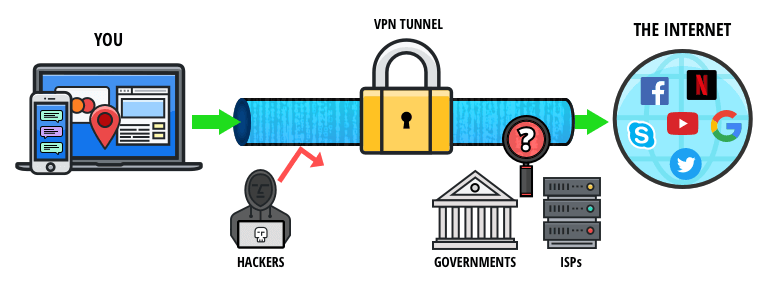
Are you looking to surf the Web without getting a virus and hiding your identity on ANY website?
Would you like to know that your Internet provider cannot tell what sites you visited?
What if there was NEVER any browsing evidence on your computer from your browsing session?
TraceFree is the new way to browse the Web.
More private than a VPN and safer than the best antivirus program.
Start your 30 Day Free Trial today (no credit card required).
Tuesday, November 12, 2019
Tuesday, November 05, 2019
The Safest Way To Browse The Web
Remote browsing. The Department of Defense and many major financial institutions are switching to the remote browser as a way to surf the Web without harm to their network.
If you want a solution that is better than the best antivirus software, get the FIRST Virus Free Browser TraceFree.
Labels:
best browser,
remote browser,
safest browser,
virus free browser,
vpn
How To Create A Spoof Email
Play a trick on your friends. Send an email FROM any email address TO any email address.
For entertainment purposes only.
Send an email to any email address from any email address.
For entertainment purposes only.
Send an email to any email address from any email address.
Monday, November 04, 2019
The Safest Browser
Do you want to surf the Web and never get a virus?
Do you want to know that a website can never identify or track you?
Get the safest browser, TraceFree.
Start your 30 Day Free Trial to the virus free browser.
Do you want to know that a website can never identify or track you?
Get the safest browser, TraceFree.
Start your 30 Day Free Trial to the virus free browser.
Friday, September 27, 2019
How The Online Privacy Problem Can Be Solved
This week’s “right to be forgotten” case ruling should be a wake up call for all Web users.
Browsing the Web is very much like driving a car on a city street. There are cameras everywhere scanning the car and license plate. This data is then sold or shared with parties without the user’s consent.
Cloud browsing, also known as remote browsing, is like renting a car to drive through the city filled with surveillance cameras. When you browse the Web with a rented browser, websites record the car and license plate of the cloud provider’s computer, not the user’s car.
The Internet provider cannot see or share this data either. They only see that you drove your car to a “browser rental agency”. They cannot see the car, the license plate or any sites you visited. Just like renting a car, there is NO evidence of where you went in or on your own car.
This is how the online privacy problem is solved.
Browsing the Web is very much like driving a car on a city street. There are cameras everywhere scanning the car and license plate. This data is then sold or shared with parties without the user’s consent.
You can’t control being recorded and who is seeing the data, but you can control the data they get.
Cloud browsing, also known as remote browsing, is like renting a car to drive through the city filled with surveillance cameras. When you browse the Web with a rented browser, websites record the car and license plate of the cloud provider’s computer, not the user’s car.
The Internet provider cannot see or share this data either. They only see that you drove your car to a “browser rental agency”. They cannot see the car, the license plate or any sites you visited. Just like renting a car, there is NO evidence of where you went in or on your own car.
This is how the online privacy problem is solved.
Thursday, September 26, 2019
The Best Private Browser
Private browsers like Tor and Brave claim to offer "private and secure browsing" but that's not really true.
Browsing using a VPN? Well your data may be secure, but your device isn't.
A private browser is:Browsing using a VPN? Well your data may be secure, but your device isn't.
- When a website cannot identify who you are or where your real location is
- A website cannot leave any cookies, malware or viruses on your device
- Your Internet provider cannot tell what sites you visited.
- There is no browsing evidence of any kind on your device
The future of browsing is to use a server in the cloud. This isolates the browser from the user's device.
When you want complete privacy and security get the best private browser TraceFree.
![]() |
Labels:
Brave,
incognito mode,
private browser,
Tor,
virtual browser,
vpn
Tuesday, May 14, 2019
How To Tell If You Are Private Online
Your VPN says you're "private and secure". Tor and the so called private browsers promise "complete anonymity". How can you prove it?
Here's a simple way to tell if your private browsing solution REALLY is keeping you private.
While using your VPN, Tor, or any private browser simply do this:
1. On any website, right click on any image.
2. Click "Save Image As..."
3. When the popup window appears, does it show YOUR PC?
If you are seeing your PC in the popup window it means that website (and any website) can see and touch your device. If a site can see your device there is no way you can be private (and definitely not secure).
True online privacy comes when you isolate your device from the browsing session. That can only be done with a cloud browser like TraceFree
Labels:
Brave,
Epic,
incognito mode,
remote browser,
Tor,
virtual browser,
vpn
Monday, May 13, 2019
Thursday, February 28, 2019
The Private Browsing Service
ANONYMOUS on any site
Always VIRUS FREE
Browsing HIDDEN from provider
TRACEFREE on your device
Get TraceFree today
Always VIRUS FREE
Browsing HIDDEN from provider
TRACEFREE on your device
Get TraceFree today
Labels:
cloud browser,
Cloud computing,
Trace Free,
virtual browser,
vpn
Sunday, February 03, 2019
Online Privacy Secrets
Think your browsing is really private? Think you're private when using a VPN or the Tor browser?
Want to know a couple easy ways to tell how private you are?
Want to know why industries are switching from a VPN to the cloud browser?
The book Online Privacy Secrets Revealed will show you how you can tell what information you are revealing when browsing.
The experts told you to use Google's Incognito to surf privately. Thos same experts are recommending to use a VPN. Don't make the same mistake again.
Thursday, January 31, 2019
What Is A Private Browser?
What is the one thing the privacy experts told you to do to in order to be private while browsing the Web?
Labels:
cloud browser,
incognito mode,
virtual browser,
vpn
Wednesday, January 30, 2019
What Most People Dont Know About Using A VPN
Everywhere you look you see ads for VPNs. They tell you that a VPN, or a virtual private network will keep you secure when browsing the Web.
Nothing could be further from the truth.
Thursday, January 17, 2019
Could The Online Privacy Problem Be Finally Solved?
![]() |
Yesterday TraceFree, announced the world's first virtual private browser and may have finally solved the online privacy problem.
Labels:
cloud browser,
Google Analytics,
private browser,
virtual browser,
vpn
Tuesday, October 02, 2018
How to get the best prices online
A Ferrari with Neiman Marcus bags in the front seat and a minivan with plastic WalMart bags pull into the car wash center. Who do you think gets serviced first? Who do you think is offered the higher priced options?
Exactly. Why?
Tuesday, September 25, 2018
How To Hide From Google
| Private Search on Google is now possible |
If you want to hide your browsing from Google or your company relies on Google's Ad Sense or Google Analytics, you are really going to want to read this.
Google is good, I mean REALLY good at tracking you and your browsing. Between Search, Chrome browser, Android phones, Google Maps, YouTube or any one of the millions of websites that have Google Analytics script on them it is VERY HARD to hide from Google.
However is it now possible and it is having a major impact.
Monday, April 16, 2018
How To Tell If You're Private Online
We hear mainstream media recommending different applications and services for online privacy. Most of these outlets are wrong and it’s frustrating to see the public be mislead.
There are 2 ways to determine how “private” your private online solution is.
The first way to know is the easiest. Is It Free?
You’ve heard the expression, “if it’s free, you’re not the consumer, you’re the product”. Well that's very true. Remember in the early days of the Internet when all the critics were asking’ “How will these free sites make money?” Now we know how
For starters, your browser was free wasn’t it? It either came with your device or you could download it for free. This amazing tool that lets you access so much information is free? How do you think a software company that had to pay to build that browser stays in business? How do you think they can afford to make updates? Your “free” browser knows EVERY search you made, every site you visited, every email you read/sent. Sounds pretty costly now doesn’t it?
So you surf in Incognito Mode? How much did you pay to use that? That free ad blocker program keeps you private right?
Now let’s look at all of those wonderful sites that let you do so many great things, for free. You can get just about any question answered by asking Google. You can share your thoughts and pictures with your friends on Facebook. You can play doctor by asking WebMD medical questions. You can communicate with anyone with email. Hmmm, those are all free aren't they?
That “private” search engine doesn’t share your search queries right? It really doesnt matter if they do or not, because your browser, your Internet provider and the sites you visit will be able to identify you, your device and know what you searched for. Private search engines are one of the biggest online myths out there and yet the media still advises the public to use them.
“Free” WiFi? Have you ever wondered how those retail stores that were struggling before, are now able to do so well after free WiFi was offered? You paid a couple bucks for a cup of coffee and then logged into THEIR website to accept their terms and conditions for their “free” WiFi service. Your device touched their website. What other establishment would let you take up space for hours without purchasing something. You are the product baby.
“One person, one cup, one neighborhood at a time”...doesn’t sound so wholesome now does it?
With each click, search, surf, email, post etc you are allowing every site and ISP to know more about you. If they aren’t leaving identifiers (cookies) on your device, they are reading the ones that are already there. With these identifiers that can build a very extensive profile of you.
The second way you can determine how “private” you really are. One of the best websites we know of is www.whatismybrowser.com This site gives you a complete rundown of your device on their site. It analyzes your OS, browser and all of the functions your browser has.
What we hope you can see here is that it PROVES that if their site can see, touch and identify your device, then ANY site can. When a website can see and touch your device it can identify you by the numerous cookies on your device. If the site is friendly you will probably only receive more cookies and be tracked online. If the site isn’t friendly, you could get a virus, be tracked and or locked out of your computer. Either way, all the info from your device will be sold and you have no idea to who.
Our next blog will show you How To Be Private Online
Tuesday, December 19, 2017
What Do North Korea, WannaCry And Bitcoins All Have In Common?
It's official North Korea was behind the massive WannaCry cyrberattack.
North Korea behind the virus.
Victims received ransom demands, paying did not unlock their computers. Victims were told to pay in Bitcoin (untraceable).
Companies are now buying Bitcoins in order to hedge themselves against the next cyberattack.
What percentage of bitcoin buying is investment oriented versus hedging?
Ok companies are buying Bitcoin as a hedge, but what can they do to protect themselves in the mean time?
Easy. Just do this.
The Insider Buying Report..Finding Small Companies Before They Become Big Winners
Just a couple months ago we featured an Internet of Things nanocap stock (market cap of $15M) that had very nice insider buying.
Today that stock is up over 250% and the IBR Portfolio year to date is up 197%.
We only focus on small companies with insider buying.
Small companies with insider buying have been delivering big winners for subscribers.
Subscribe today
Who Is A Bigger Threat To Internet Advertising Industry Than Google And Facebook?
"the tech duopoly’s dominance threatens the marketplace of ideas"
In 2017 Google and Facebook have accounted for 84% of all digital advertising outside China, including 96% of its growth, according to an industry forecast this month from Zenith, Magna and GroupM.
This is scary.
Google is used for nearly 90% of online searches in the U.S. A Pew survey this summer found that the four most popular social-media sites for getting news are Facebook, YouTube (owned by Google), Twitter (which has a Google partnership), and Instagram (owned by Facebook). No more than 5% of Americans use another social-media platform to get news.
Who has even greater influence than Facebook and Google?...your Internet provider.
They control the "pipe" to your device. They are the ultimate gatekeeper and would have even more control over what ads and news you see.
France Has A Problem With Facebook And Their Whatsapp Privacy
When you understand that EVERY application on your phone can see every other app, your contacts and activity (calls, texts, pics, location, email, messages) of your phone, you will be more careful of which "free" apps you download.
France’s data privacy watchdog may fine messaging app WhatsApp if it does not comply with an order to bring its sharing of user data with parent company Facebook (FB.O) into line with French privacy law.
“The only way to refuse the data transfer for “business intelligence” purpose is to uninstall the application,” the CNIL said in a statement.
Subscribe to:
Posts (Atom)